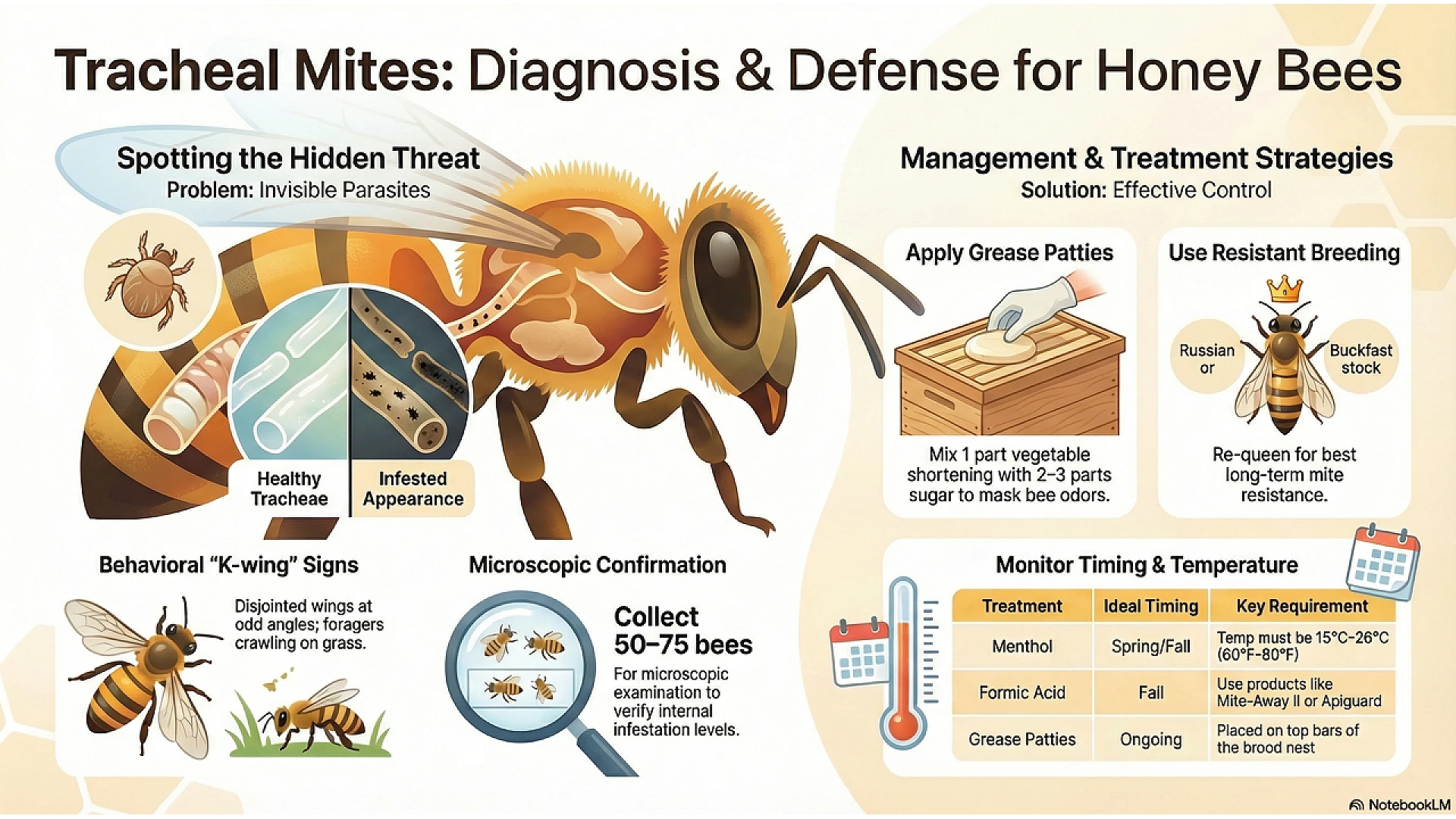

The provided text outlines the biological impact and management of tracheal mites, which are internal parasites that inhabit the respiratory systems of honey bees. Because these pests are microscopic, definitive diagnosis requires a laboratory examination of the bee's airways to identify discoloration or scarring. Beekeepers may observe physical indicators of an infestation, such as disjointed wings, bees crawling on the ground, or significant colony losses during the winter months. To combat these parasites, the source suggests utilizing resistant queen stocks and chemical interventions like menthol or formic acid. Additionally, the application of grease patties serves as a preventative measure by disrupting the mites' ability to locate and infect new hosts. Physical management practices, including the avoidance of combining weak hives, are also highlighted as essential strategies for maintaining hive health.