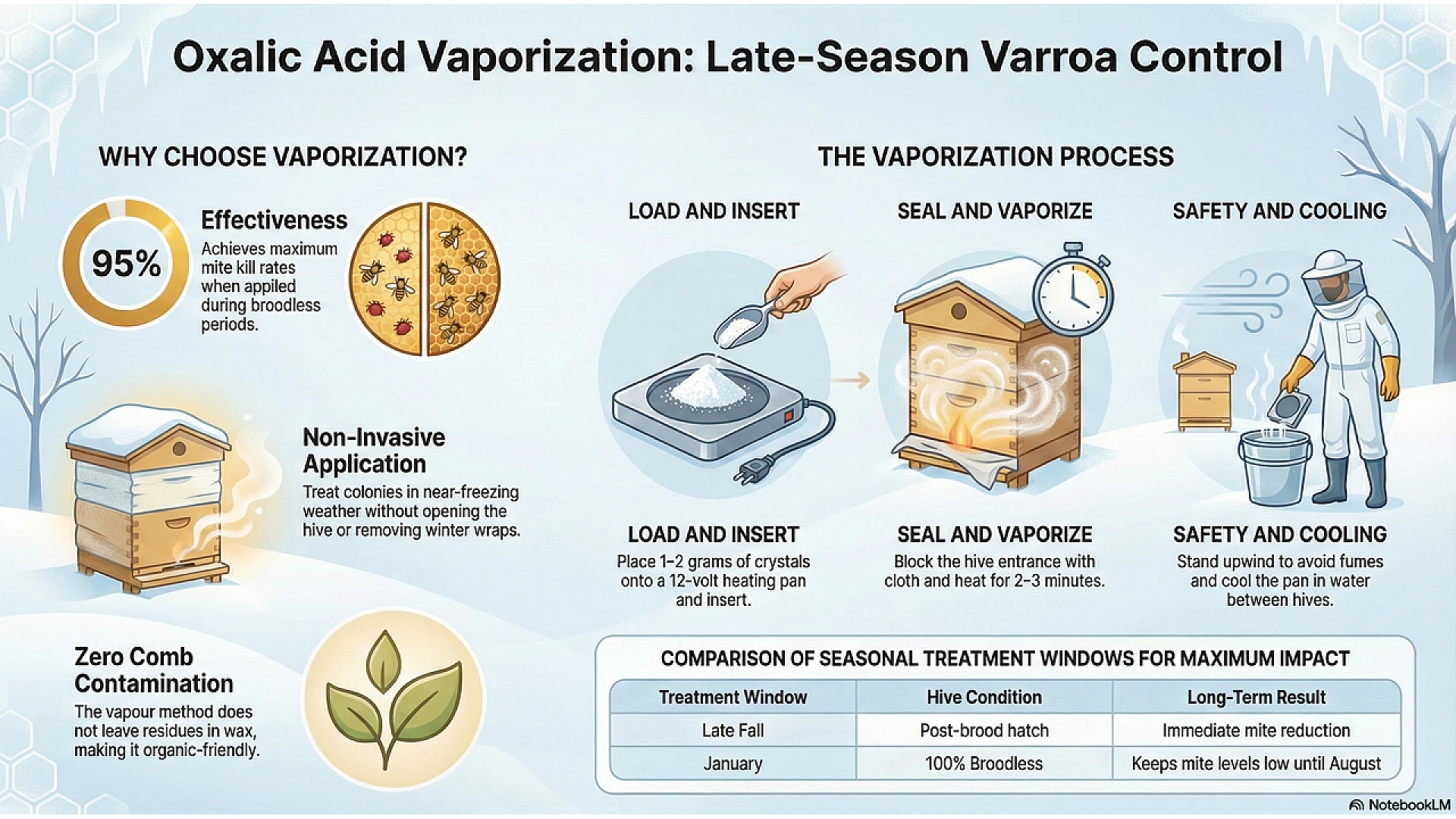
In this excerpt, beekeeper James Murray describes the benefits and technical application of oxalic acid vaporization as a late-season strategy for managing Varroa mites. Unlike the liquid dribble method, this technique uses a heated pan to create a crystal-filled fog that coats the hive without requiring the colony to be opened in cold weather. The author emphasizes that treating during broodless periods, particularly in late fall or January, results in high efficacy while ensuring no comb contamination. To execute this safely, practitioners use a 12-volt battery to heat the acid and must manage the hive entrances carefully with cloths to contain the fumes. While the process is highly effective, the text stresses the importance of operator safety and standing upwind to avoid inhaling the toxic vapors. Over time, this integrated approach helps maintain low parasite levels through the following summer by targeting mites when they are most vulnerable.