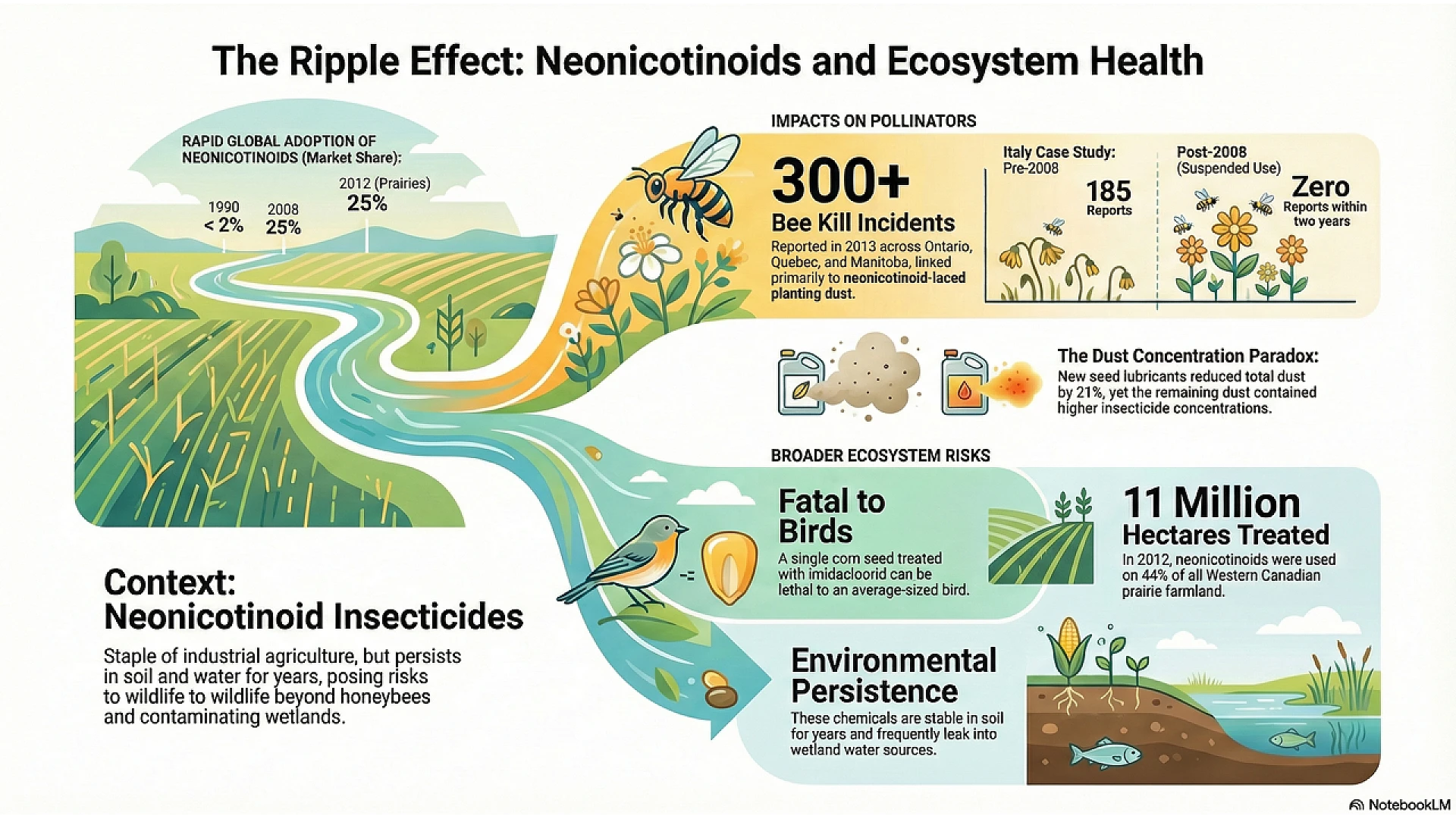

This text examines the environmental hazards associated with neonicotinoid insecticides, specifically focusing on their devastating impact on pollinators and broader ecosystems. Research from Ontario and Western Canada suggests that these chemicals persist in soil and water, leading to significant honeybee mortality and potential harm to bird populations. While some agricultural groups highlight crop yield benefits, beekeepers and scientists express alarm over contaminated planting dust and the systemic presence of toxins in the environment. The discourse reflects a growing tension between industrial farming practices and the urgent need for regulatory intervention to prevent a widespread loss of biodiversity. Consequently, many advocates are looking toward international bans and stricter management practices to mitigate these long-term ecological risks.