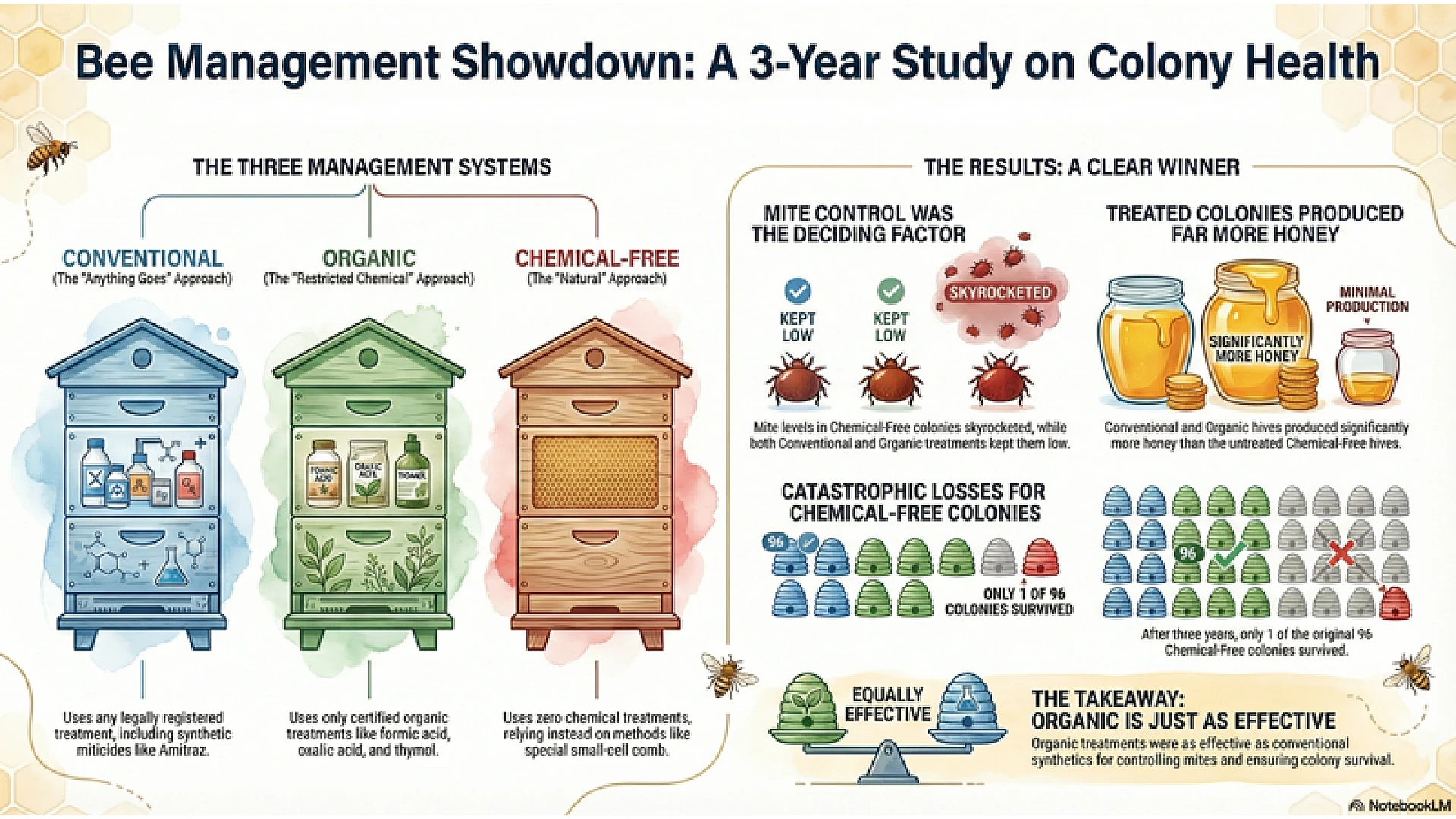

Dr. Robyn Underwood presents the results of a comprehensive study titled the COMB project, which evaluates conventional, organic, and chemical-free honey bee management systems. The research reveals that colonies managed with either synthetic or organic treatments produced significantly more honey and maintained much lower Varroa mite levels compared to those left untreated. Data indicates that chemical-free colonies suffered devastating losses, with nearly all failing to survive the three-year study due to uncontrolled parasitic loads and associated viruses. Underwood emphasizes that organic methods, such as using formic acid, are just as effective as conventional treatments for maintaining hive health and ensuring overwintering success. Ultimately, the study concludes that active pest management is essential for sustainable beekeeping, as relying solely on genetics or non-intervention led to poor health outcomes. This overview serves as a practical guide for beekeepers to choose responsible management strategies that prioritize colony survival and productivity.
https://www.youtube.com/watch?v=ZnfPDBYldTU