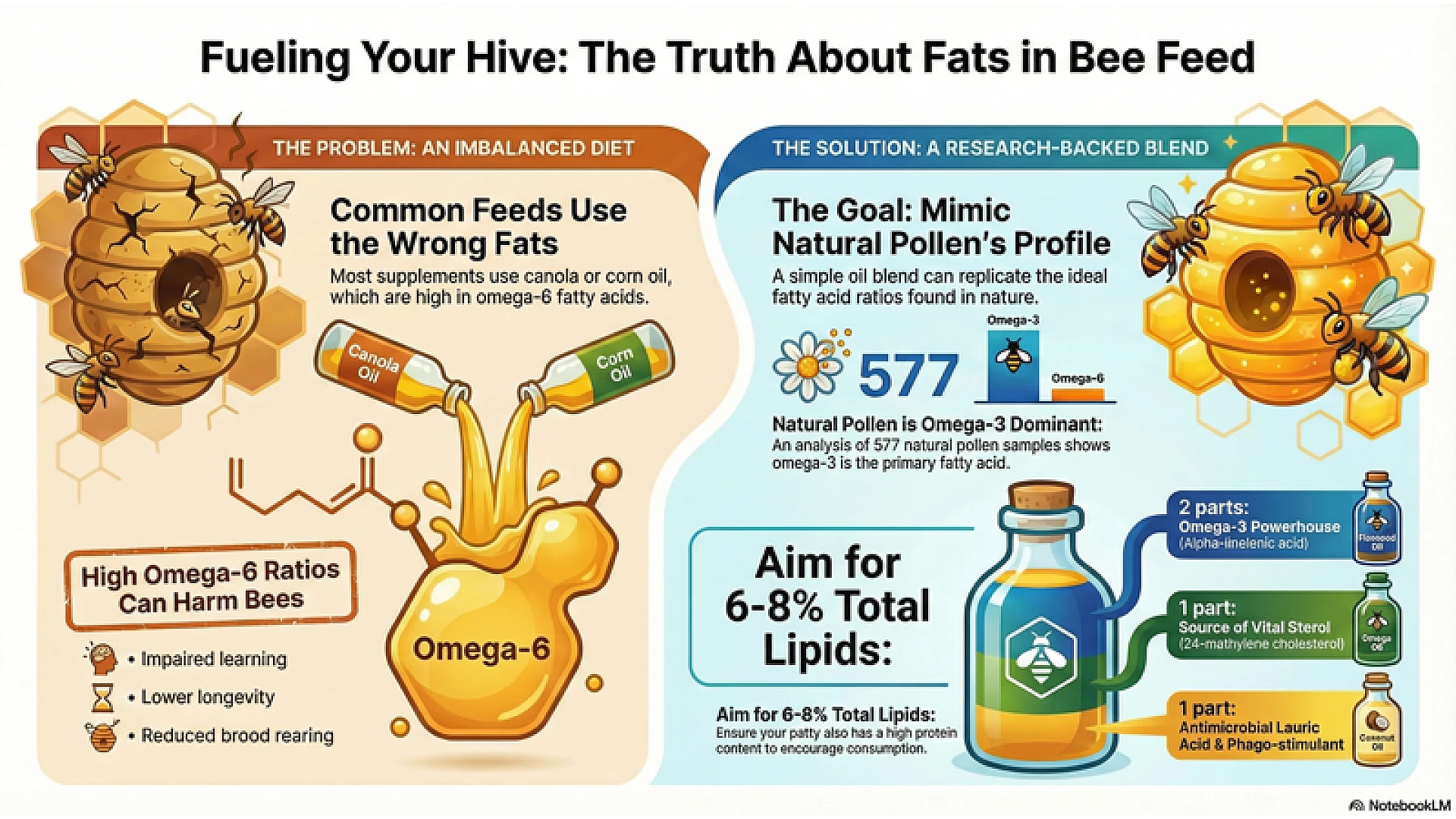

This transcript highlights the importance of balanced fatty acids in supplemental honey bee nutrition, specifically focusing on the omega-3 to omega-6 ratio. The speakers explain that while many commercial beekeepers use canola or corn oil, natural floral pollen is actually dominant in omega-3, which is essential for bee learning, longevity, and brood rearing. To better mimic natural diets, the source suggests a specific blend of flaxseed, borage, and coconut oils to provide necessary lipids and antimicrobial properties. Research cited in the discussion indicates that a high omega-6 concentration can be detrimental, leading to increased colony mortality and cognitive deficits. Furthermore, the participants emphasize that for these fats to be effective, the feed must maintain a high protein-to-lipid ratio to ensure the bees find the mixture palatable. Ultimately, the goal is to shift beekeeping practices toward scientifically informed fat profiles that support optimal reproductive and metabolic health.
Source: https://www.youtube.com/watch?v=cbR8etsk9Qs
Fatty Acid / Lipid | Source Oil / Feed Ingredient | Percentage / Ratio in Formulation | Nutritional Function | Impact on Bee Health | Natural Presence in Pollen | Source |
|---|---|---|---|---|---|---|
Alpha-linolenic acid (Omega-3 / ALA) | Flaxseed oil | 2% to 6% | Cognitive performance, reproductive performance, digestion, and absorption | Improves feed intake, colony population, sealed brood amount, and worker bee longevity | Dominant fatty acid across 577 pollen samples | [1] |
Linoleic acid (Omega-6) | Canola oil, corn oil, or borage oil | Less than Omega-3 | Essential fatty acid; energy, reproduction, growth, and development | High ratios relative to Omega-3 increase mortality and decrease brood rearing | Present at 0.65; common to all samples but should not be dominant | [1] |
Lauric acid | Coconut oil | 1 part in a 1:1:2 mix | Antimicrobial, antiviral, and anti-fungal agent; phagostimulant (attractant) | Effective against Bacillus larvae (American Foulbrood); safe prevention agent | Fairly common in pollen but not common to all 577 samples | [1] |
24-methylene cholesterol (Phytosterol) | Borage oil | 1 part in a 1:1:2 mix | Dominant sterol in royal jelly; vital for reproductive health | Supports brood rearing and physiological development | Constitutes 49-58% of total sterols in royal jelly | [1] |
Palmitic acid | Palm oil (Red palm oil) | 0.5 to 1 ratio (approx. 21.27% of mix) | Nutritionally important for metabolic health | Essential for proper growth and development | Common to all samples; second most important nutritionally after Omega-3 | [1] |
Oleic acid | Canola oil | Not in source | Nutritional component common to pollen | Beneficial but requires balance with other fatty acids | Common to all samples; mean concentration just below palmitic | [1] |