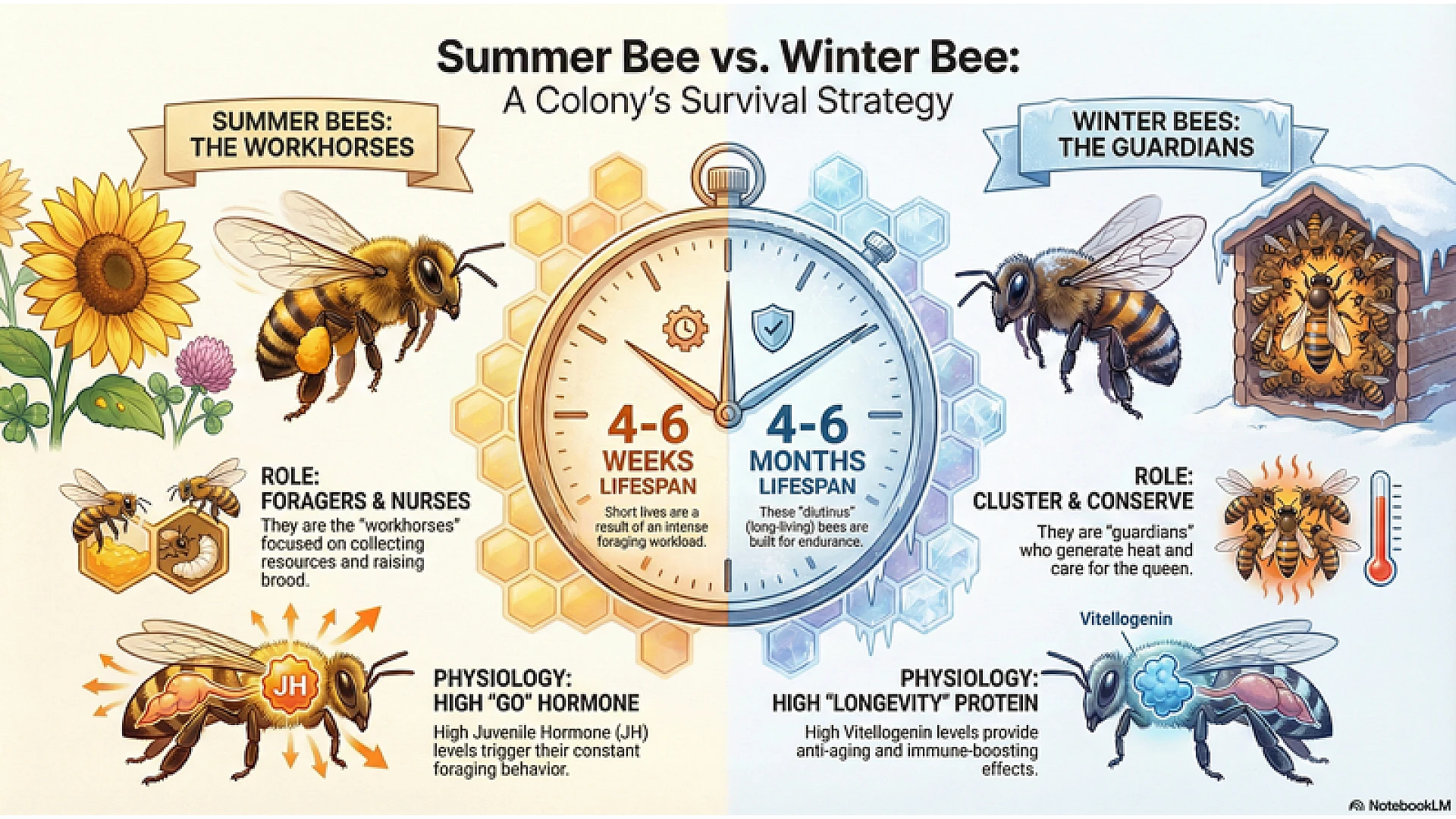
This text details the stark physiological and behavioral differences between honeybees born in the summer versus those born for the winter. While summer bees function as short-lived laborers focused on intensive foraging, their winter counterparts are biological specialists designed for extended survival. To endure the cold, winter bees develop massive fat reserves and high levels of vitellogenin, a protein that promotes longevity and boosts their immune systems. Conversely, summer bees possess higher hormone levels that drive them toward active outdoor work but result in a much shorter life cycle. These distinct adaptations in diet, hormonal balance, and gut health ensure the colony can successfully transition from seasonal productivity to winter preservation. Ultimately, the source illustrates how honeybees alter their fundamental biology to meet the specific demands of their environment.