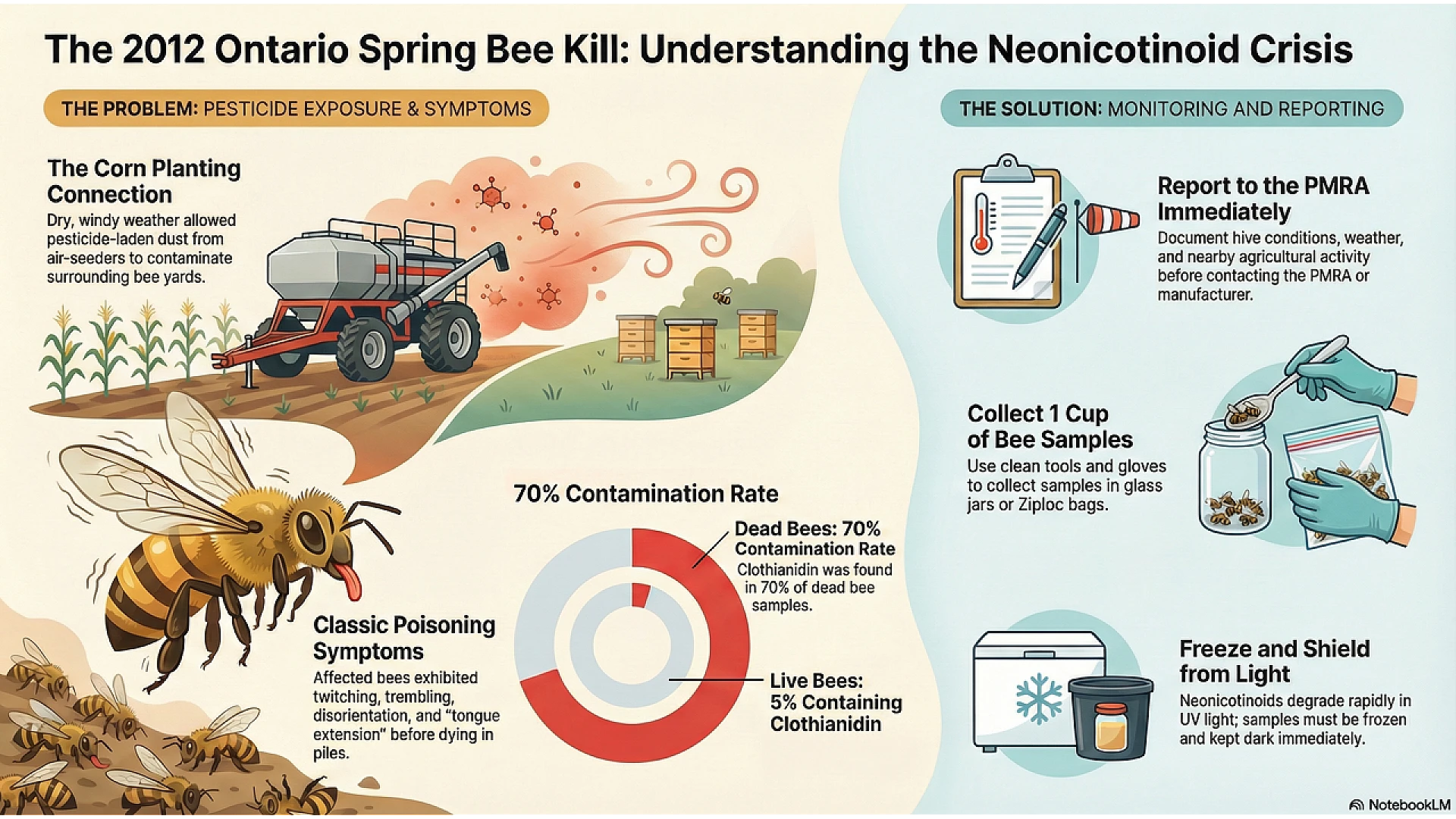

In 2012, Ontario beekeepers experienced an unprecedented surge in honeybee fatalities following the planting of corn treated with neonicotinoid pesticides. Investigations by the Pest Management Regulatory Agency suggested that agricultural dust from air-seeders likely contaminated the environment, as high levels of clothianidin were found in dead bee samples. Affected apiarists observed devastating symptoms like colony collapse, queen failure, and contaminated hive equipment that forced them to destroy their combs. While the government is implementing mitigation strategies rather than an outright ban, they emphasize the importance of reporting incidents to monitor chemical impacts. To support future research, the sources provide specific sampling guidelines for beekeepers to document suspected poisonings and protect pollinator health.