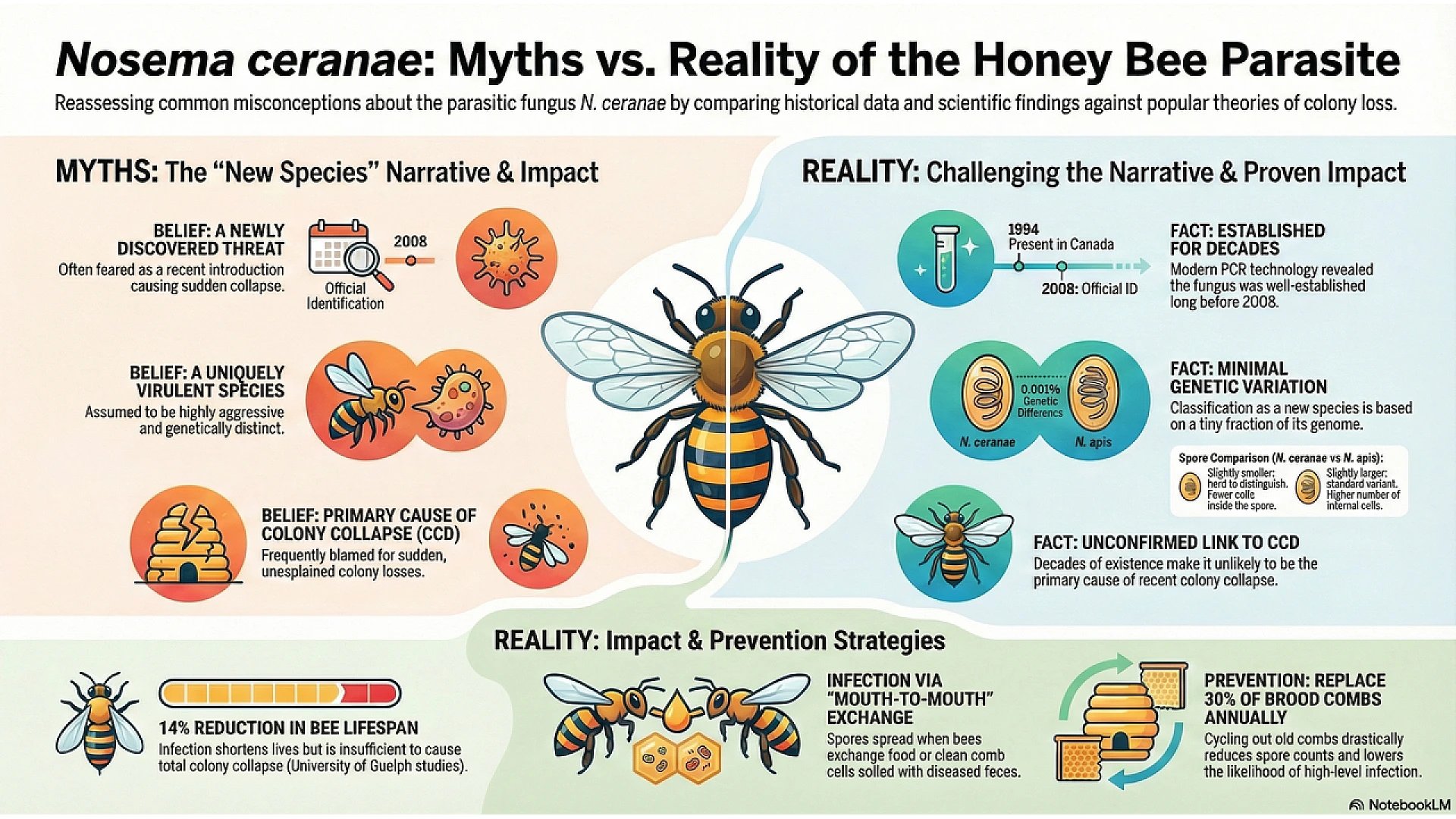
This text examines Nosema ceranae, a parasitic fungus that infects honey bees and has been linked to Colony Collapse Disorder. While some researchers identify it as a distinct and highly virulent species, the author questions if it is truly a new pathogen or merely a strain of the long-known Nosema apis. Evidence shows that this parasite has existed globally for decades, but was only recently identified due to advances in DNA sequencing technology. The author argues that current scientific findings are contradictory regarding its lethality, suggesting it may not be the primary cause of massive bee losses. To mitigate the impact of the disease, beekeepers are advised to rotate out old honeycomb to reduce spore contamination within the hive. Ultimately, the source calls for more comprehensive genetic research to fully understand the parasite’s origins and its true threat to bee populations.