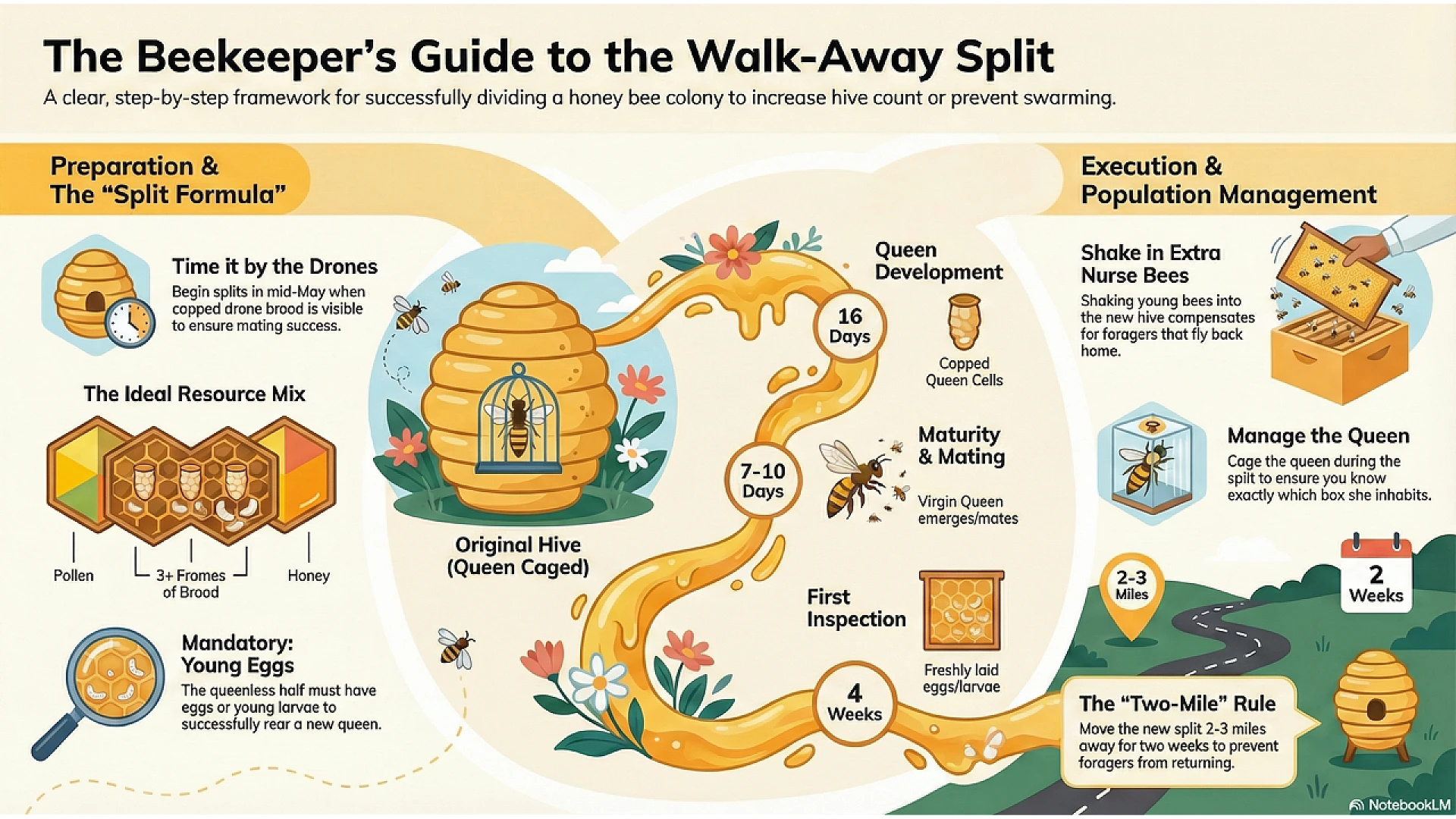
The provided text outlines a simplified beekeeping technique known as the walk-away split, which is used to expand colonies by dividing a single healthy hive into two. To succeed, a beekeeper must equally distribute resources such as brood, honey, and pollen while ensuring the queenless section contains young larvae or eggs to produce a new leader. The process emphasizes the importance of nurse bees and proper hive placement to prevent older foragers from abandoning the new location. By minimizing interference for several weeks, the bees are allowed to naturally develop a new queen and establish a self-sufficient colony. This method is ideally performed during the spring or early summer when floral resources are abundant and the parent colony is thriving. These guidelines offer a practical roadmap for Canadian beekeepers looking to grow their apiaries through natural biological processes.