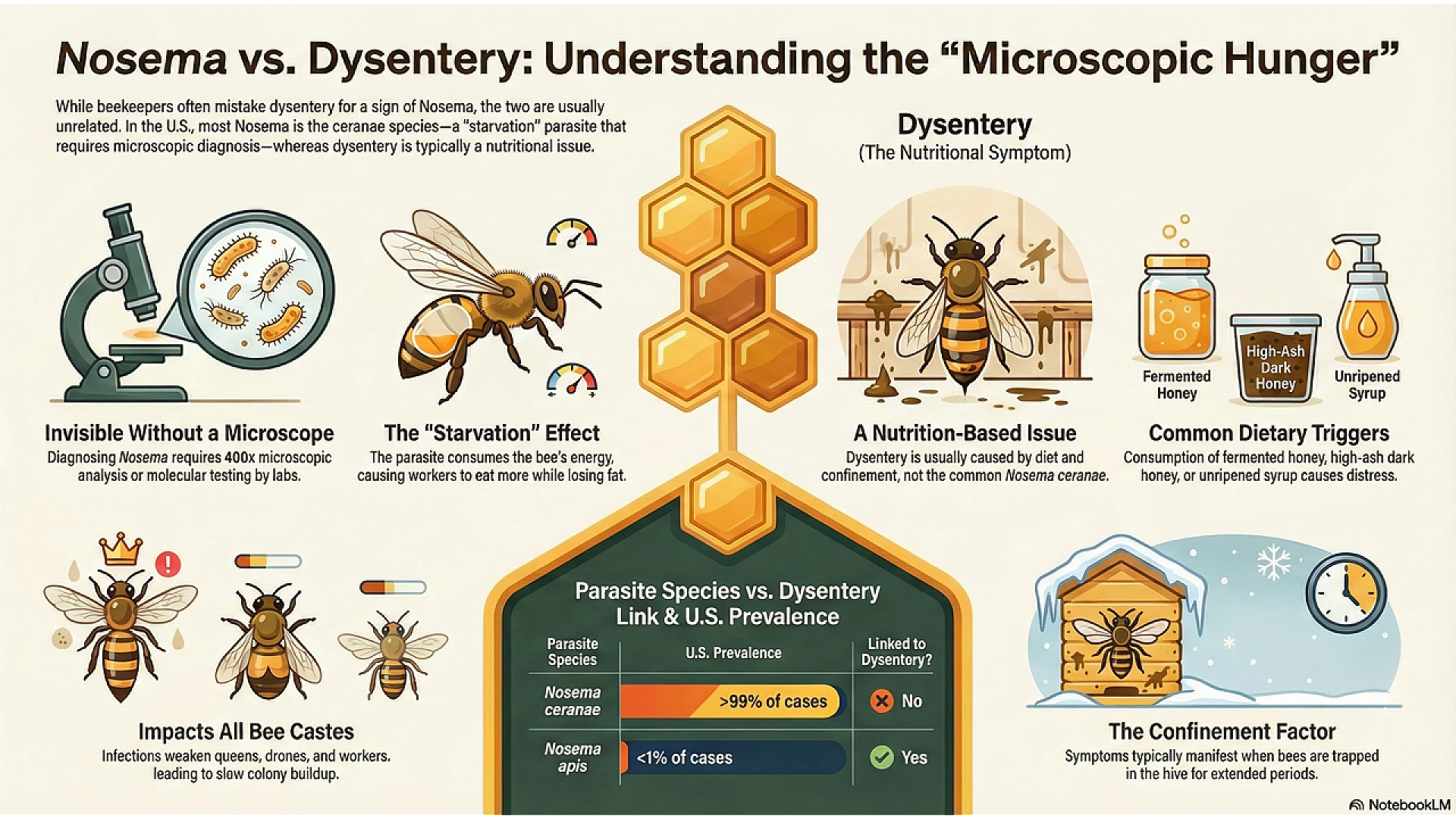

This text clarifies common misconceptions regarding Nosema, a prevalent fungal parasite that attacks the digestive systems of honey bees. While beekeepers frequently associate dysentery with this disease, the source explains that such symptoms are rare and typically stem from nutritional issues or poor-quality food. Modern infections, primarily caused by the Nosema ceranae species, are difficult to detect because they lack obvious physical signs and require microscopic analysis for a formal diagnosis. Affected colonies suffer from diminished energy levels, leading to stunted population growth and a reduced ability to nurse developing brood. By starving individual bees of nutrients, the parasite weakens the entire hive’s productivity and winter survival capabilities across all castes. Ultimately, the information serves as a guide for identifying the subtle decline in colony health caused by this microscopic pathogen.