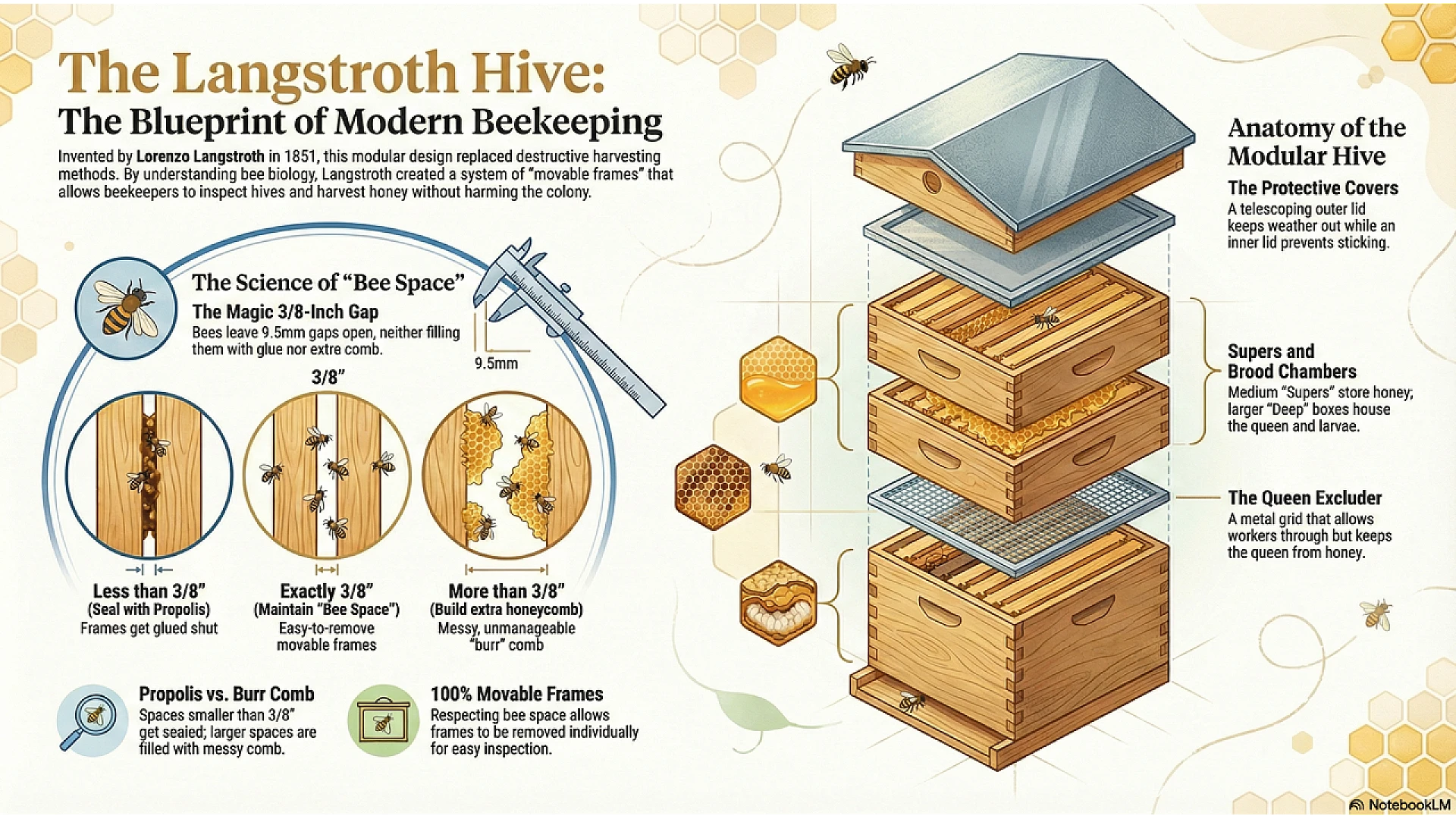

The historical significance and mechanical design of the Langstroth hive, which remains the global benchmark for modern apiculture. Developed in 1851, this invention relies on the discovery of bee space, a precise gap that prevents bees from sealing frames with wax or glue. By respecting this biological measurement, the hive utilizes movable frames and a modular structure that allow keepers to inspect colonies and harvest honey without harming the insects. This shift from destructive methods to sustainable management earned Lorenzo Langstroth the title of the father of American beekeeping. Today, while specific components have evolved, the fundamental principles of his original design continue to support the honey industry's efficiency. These sources collectively highlight how a single architectural observation transformed beekeeping from a primitive practice into a sophisticated science.