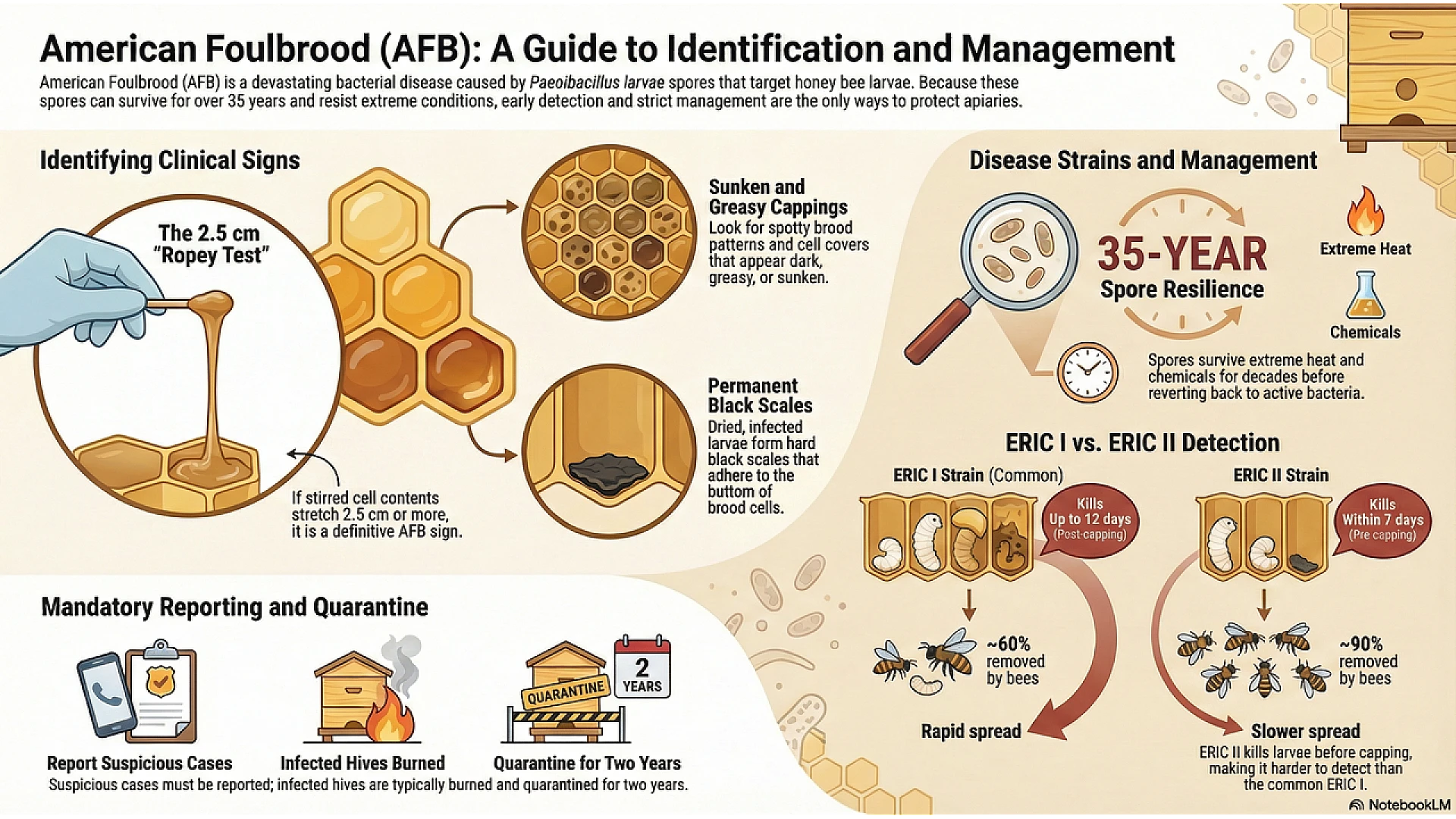

This text details the nature of American Foulbrood (AFB), a highly destructive bacterial infection that targets honey bee larvae through resilient spores. The pathogen, Paenibacillus larvae, exists in various genetic strains known as ERIC types, which differ in their geographic spread and how quickly they kill the brood. While ERIC I is the most common worldwide and creates a ropey mass in capped cells, ERIC II often kills larvae earlier, making detection more difficult for beekeepers. Diagnosing the disease involves looking for sunken cappings, a spotty brood pattern, and performing the ropey test with a wooden stick. Because the spores can survive for decades, the author emphasizes that infected colonies usually must be destroyed by fire to prevent further transmission. Furthermore, AFB is a notifiable disease that requires reporting to authorities and strict quarantine measures to protect the beekeeping industry.