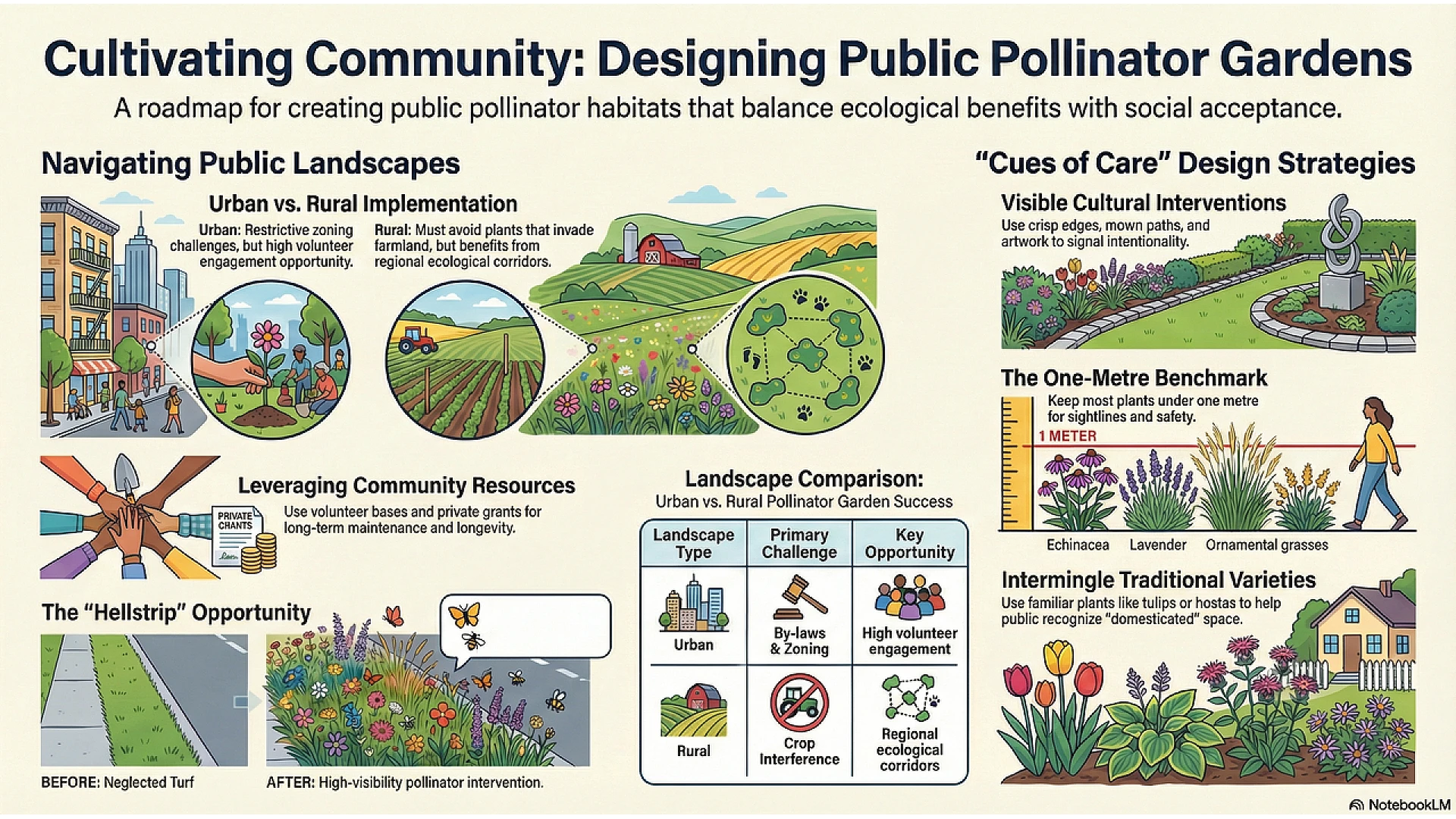

This text explores the strategic design and implementation of pollinator gardens within public landscapes, emphasizing the need to balance ecological benefits with human aesthetics. The author highlights how collaborative projects in both urban and rural settings can transform neglected spaces into vibrant community hubs while navigating specific legal or agricultural challenges. To ensure these habitats are embraced rather than mowed, designers should incorporate "cues of care," such as defined borders, signage, and organized planting patterns that signal intentional maintenance. By prioritizing visual appeal and public engagement alongside biodiversity, these gardens foster a stronger cultural connection between people and the natural environment. Ultimately, successful projects demonstrate that thoughtful landscaping can simultaneously support pollinator health and inspire civic pride.