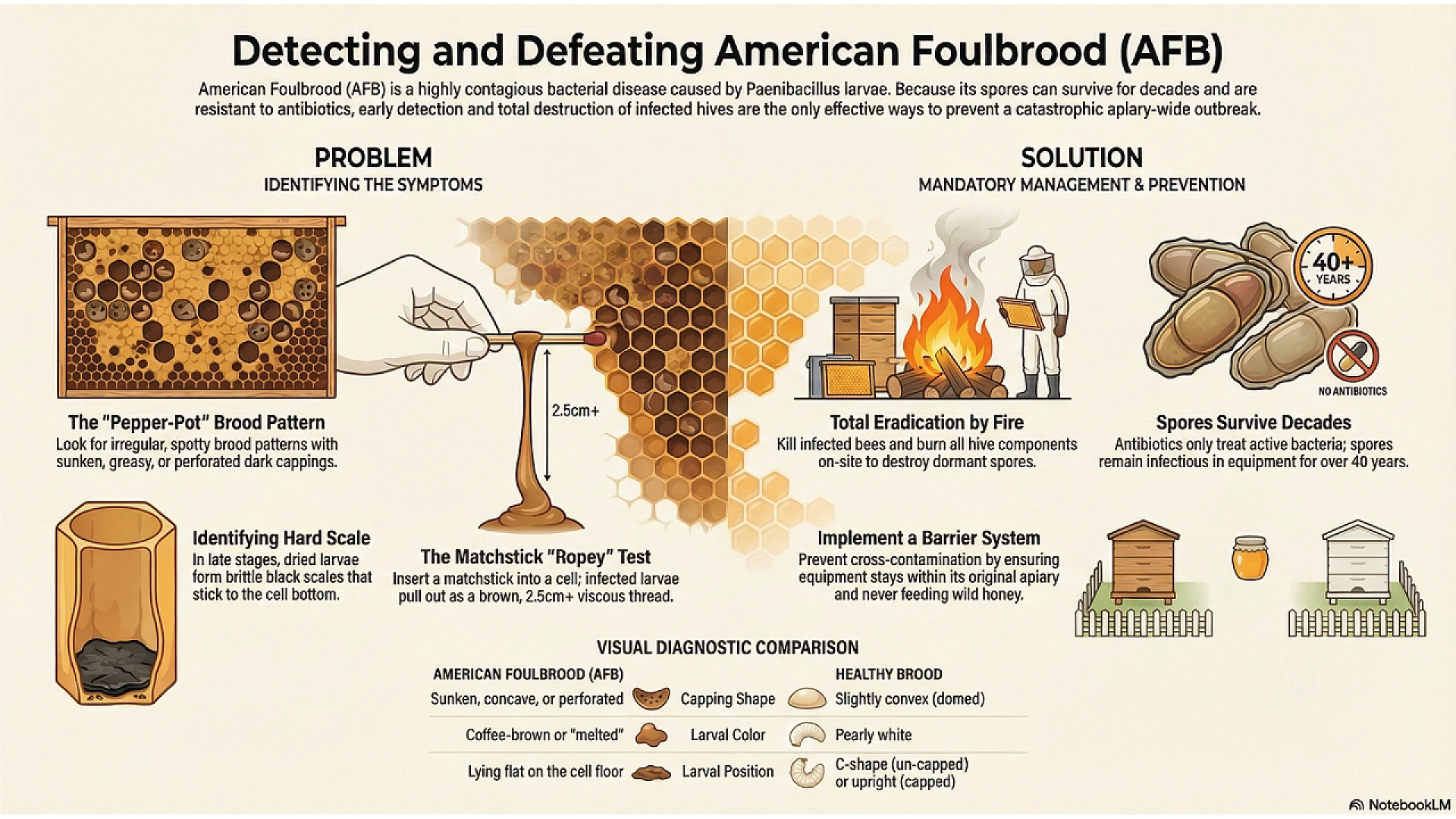

These sources provide a comprehensive guide to identifying and managing American Foulbrood (AFB) and other common honey bee diseases. The primary diagnostic tool for AFB is the "matchstick test," which reveals a characteristic brown, viscous, and "ropey" mucus that stretches over 2.5 centimeters. Beyond visual symptoms like sunken cappings and a foul odor, experts recommend using specialized test kits, flashlights, and toothpicks to differentiate between bacterial, fungal, and viral infections. While diseases like European Foulbrood or Chalkbrood may be managed through stress reduction, AFB is uniquely dangerous because its spores remain viable for decades. Consequently, the documents emphasize that infected hives must be quarantined and burned to prevent widespread contamination. Proper management also includes regular inspections, maintaining equipment hygiene, and monitoring for Varroa mite syndrome to ensure overall colony health.