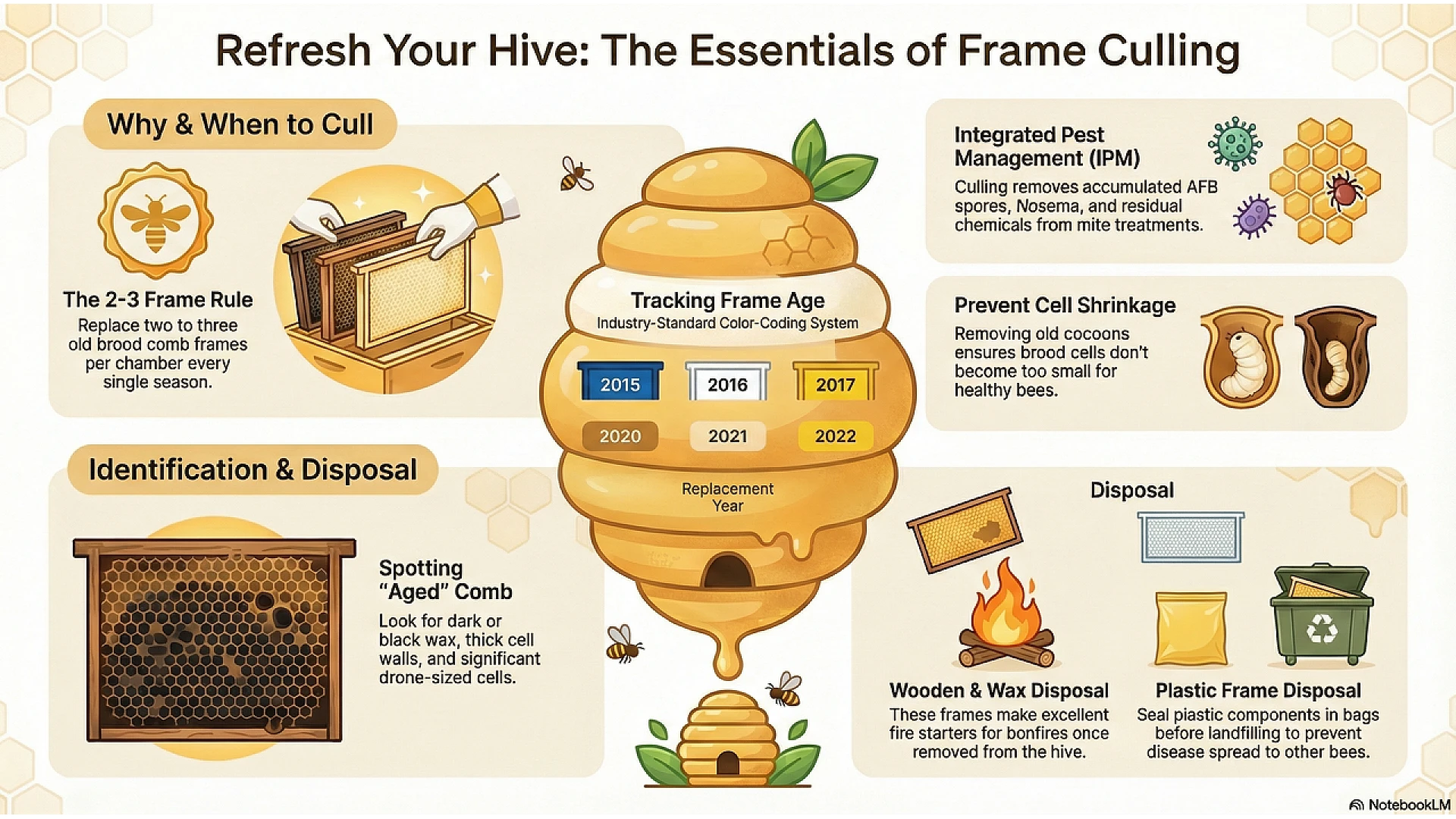
Maintaining hive health requires the regular rotation of brood frames to prevent the buildup of pathogens, chemical residues, and undersized cells. Experts suggest that beekeepers should replace two to three frames annually, using a color-coding system to track the age of the equipment. Dark, thickened comb and an abundance of drone cells serve as primary visual indicators that a frame has reached the end of its usefulness. When disposing of old equipment, wooden frames can be burned, while plastic components should be sealed in bags and sent to a landfill to prevent disease transmission. To assist colonies in establishing new comb, beekeepers are encouraged to provide supplemental feed or utilize clean, pre-drawn frames from previous seasons. This proactive management strategy ensures a cleaner environment and more robust development for the honeybee colony.