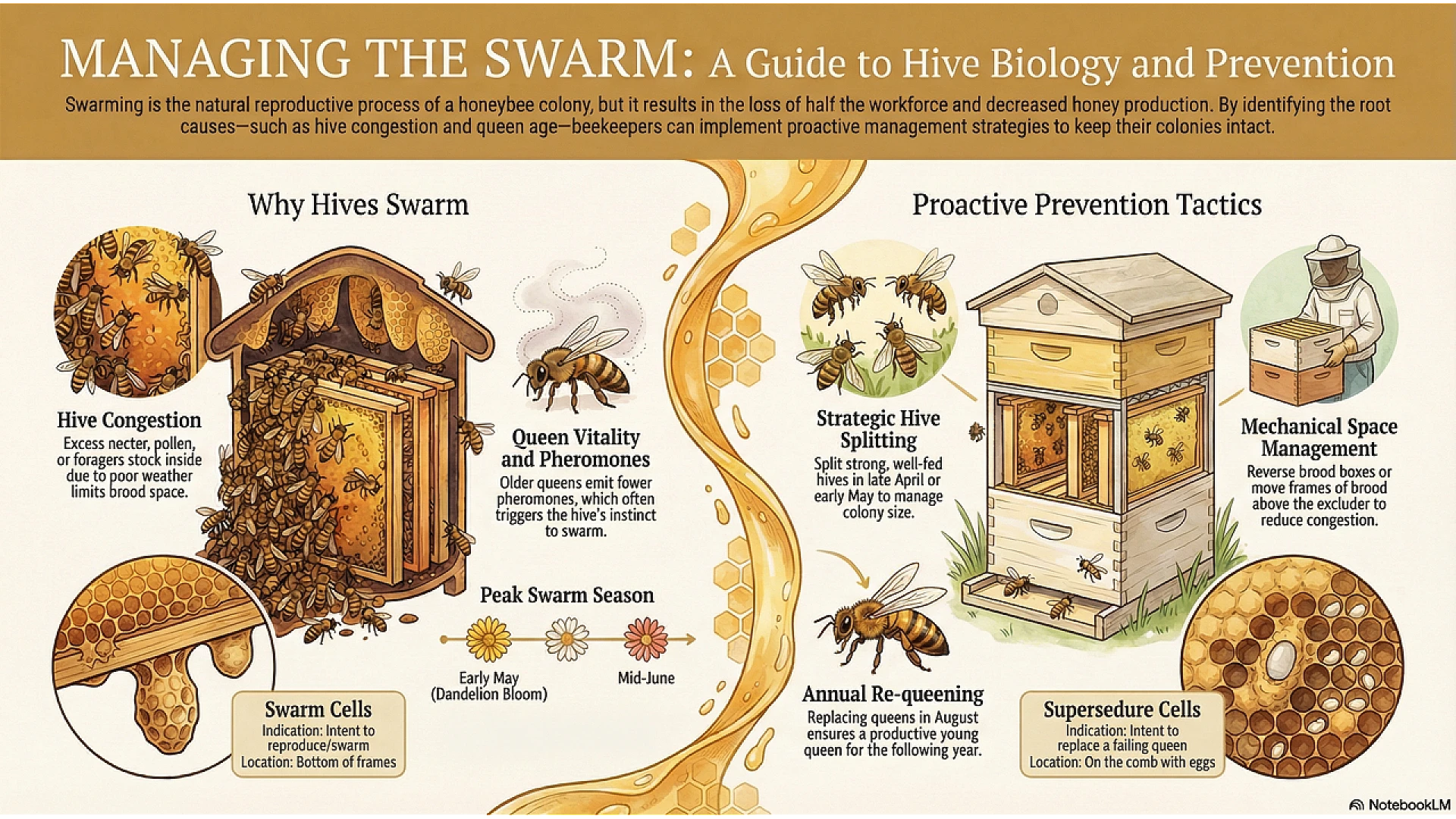
This text explores the biological mechanics of honeybee swarming, characterizing it as a natural reproductive cycle where a colony divides to form new hives. While once viewed as beneficial for expanding an apiary, modern beekeepers now view swarming as a loss of productivity because it significantly reduces honey yields. The authors identify overcrowding, the presence of an aging queen, and genetic tendencies as the primary catalysts for bees leaving the hive. To mitigate these issues, the source suggests proactive management techniques such as splitting colonies, ensuring ample physical space, and maintaining young queen stock. By recognizing early warning signs like the construction of swarm cells, beekeepers can better maintain the stability and efficiency of their hives. This overview serves as a practical guide for balancing the natural instincts of bees with the economic goals of honey production.