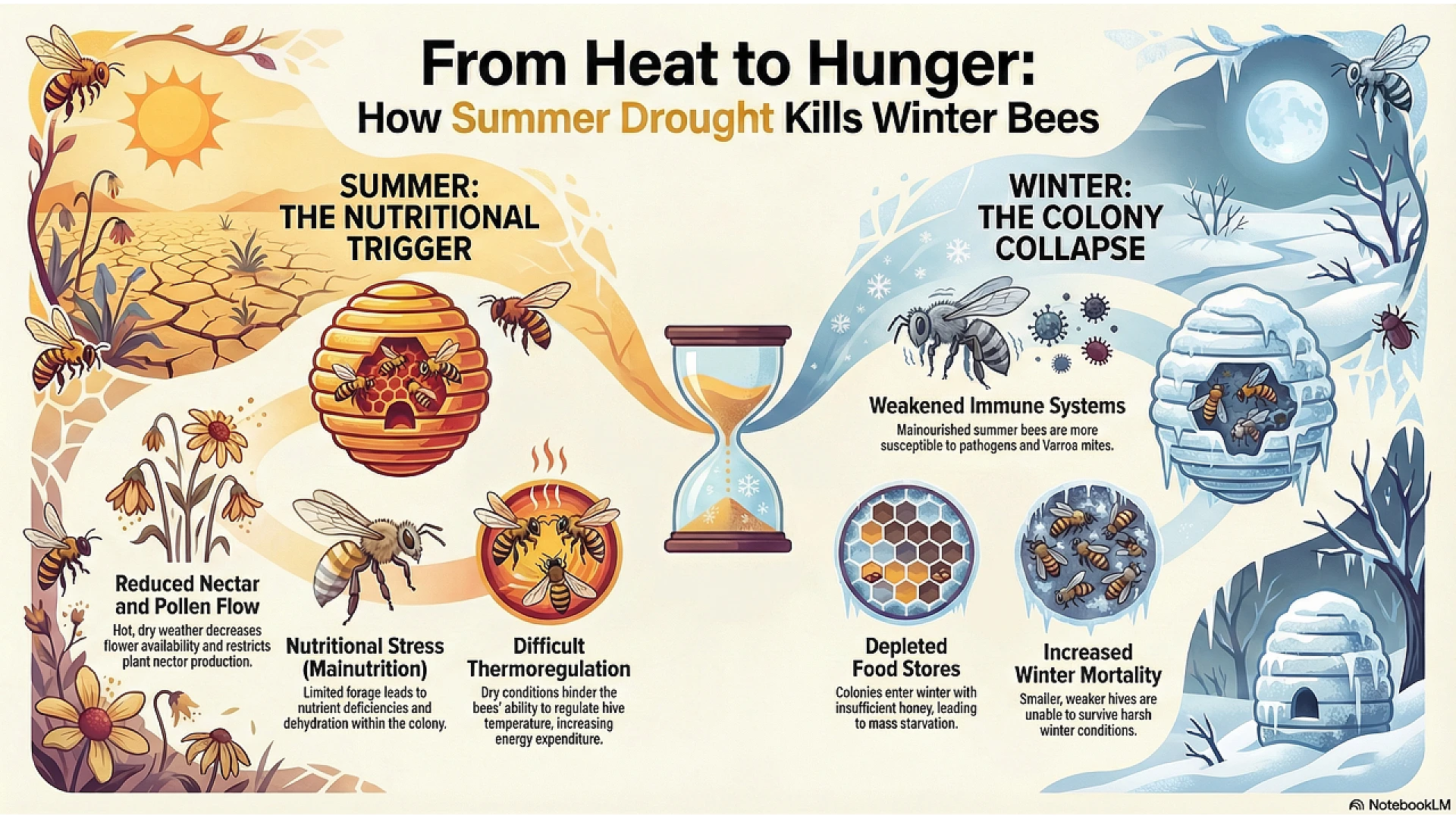
The provided text explores the critical link between arid summer conditions and the high rate of honey bee mortality during the following winter. When extreme heat and lack of rain occur, plants produce less nectar and pollen, which deprives hives of the essential nutrients needed for long-term storage. This nutritional deficiency leads to weakened immune systems, making colonies more vulnerable to diseases and parasites like Varroa mites. Furthermore, dehydrated bees struggle with internal temperature regulation, exhausting their energy reserves before spring arrives. Ultimately, these environmental stressors result in smaller, fragile populations that frequently face starvation or collapse during the coldest months. Conclusively, the research demonstrates that summer forage shortages are a primary predictor of winter hive failure.