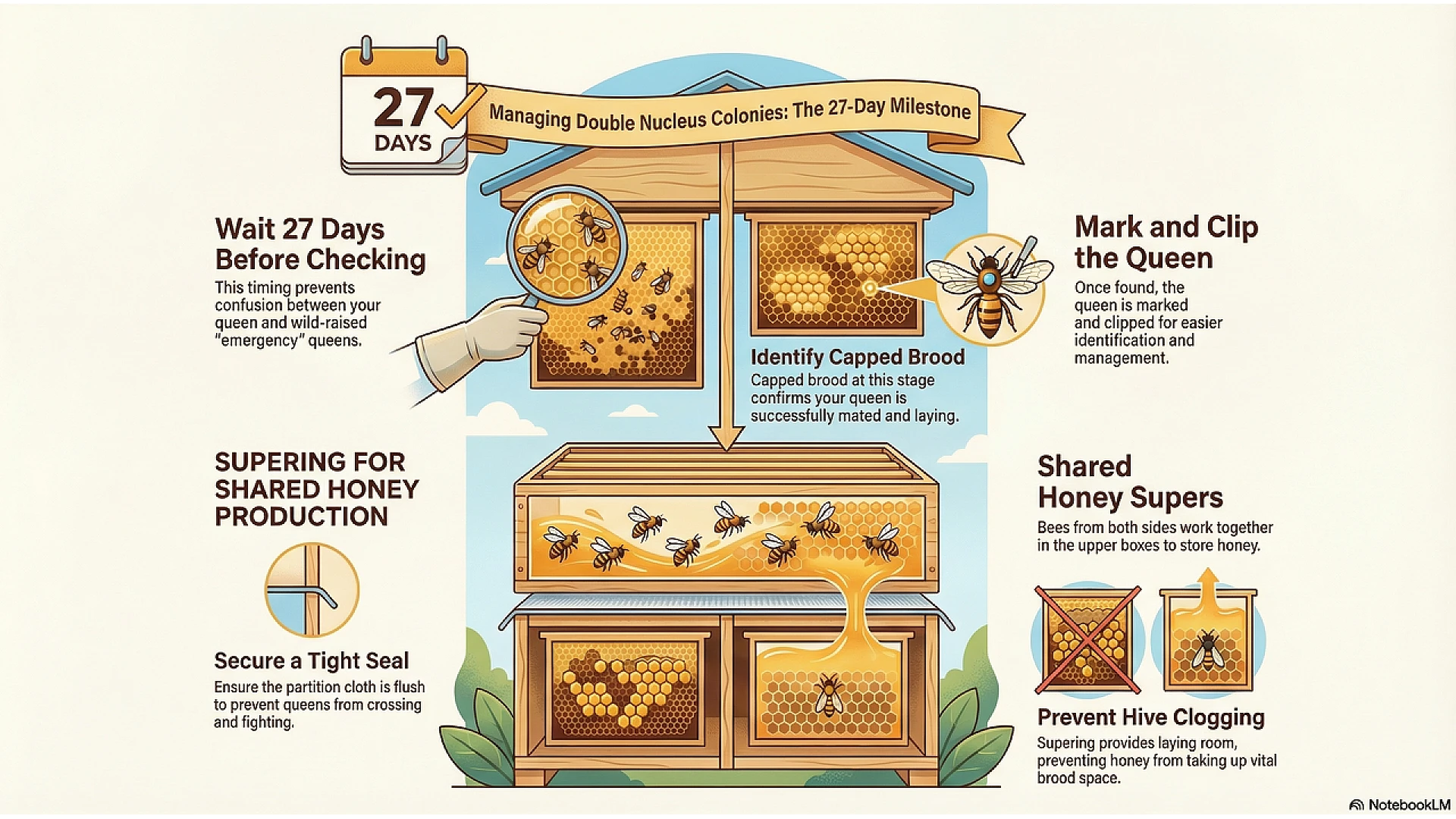
This source details the University of Guelph’s method for managing double nucleus colonies approximately one month after introducing new queen cells. Beekeepers wait exactly 27 days before inspecting the hives to ensure any mated queens have produced capped brood, which distinguishes them from "wild" queens the bees might have raised themselves. Once a productive queen is identified, she is marked and clipped to maintain colony records and control. To maximize productivity, a queen excluder is installed over both side-by-side colonies so they can share honey supers without the queens coming into contact. This configuration prevents the small brood nests from becoming clogged with honey, allowing for a harvest in the first year. Finally, these high-density units are overwintered together and can be separated into individual, independent hives the following spring.