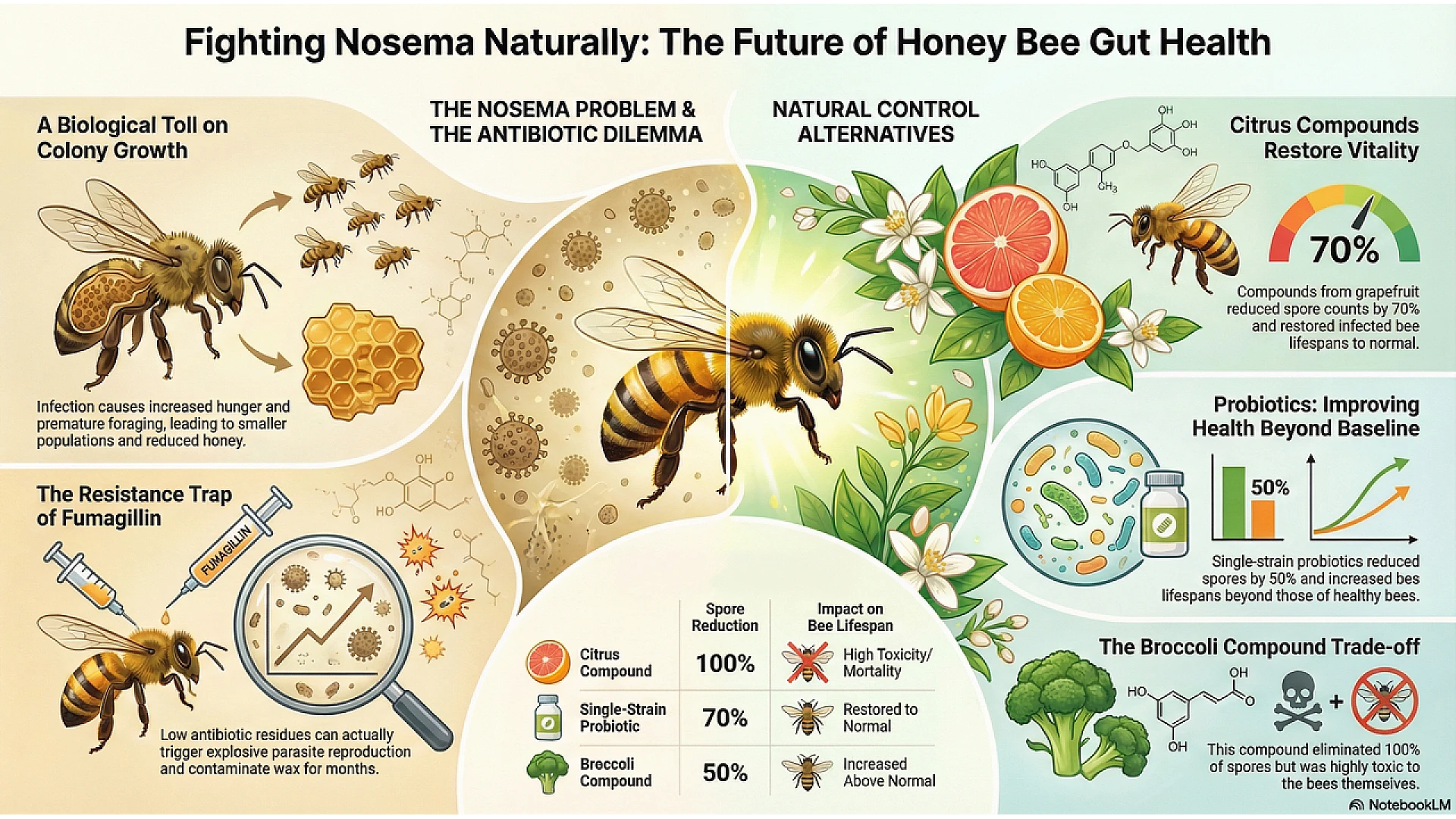

Research on Nosema, a fungal parasite that damages the honey bee digestive system, reveals that traditional antibiotic treatments like fumagillin face growing issues with chemical resistance and residue contamination. To find safer solutions, scientists evaluated various natural compounds and probiotics to determine their ability to lower spore counts and improve bee longevity. While a broccoli-derived compound was highly effective at killing the parasite, it proved too toxic for the hosts at high concentrations. Conversely, an antioxidant from citrus fruit and certain bacterial probiotics successfully reduced infection levels while significantly extending the lifespan of the bees. These biological alternatives offer a promising path toward restoring colony health without the negative side effects of conventional medicine. Future field trials will continue to examine how these natural treatments can be implemented to protect vulnerable pollinator populations.