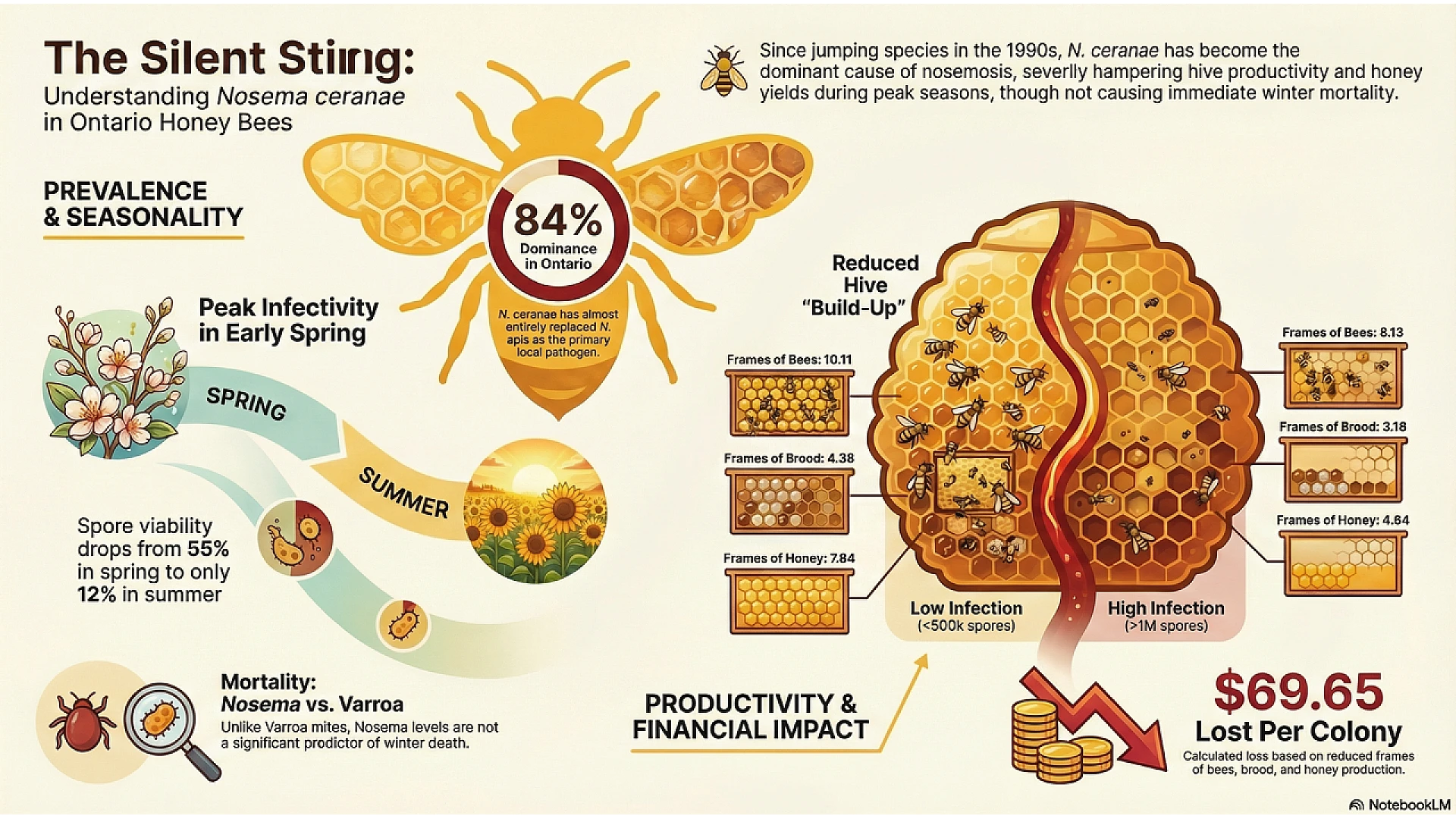
This research summary examines the emergence and consequences of Nosema ceranae, a fungal parasite that has largely overtaken its predecessor in Ontario honey bee populations. Unlike the traditional strain, this variety reaches peak infection levels during the late spring and early summer, necessitating a shift in how beekeepers time their treatments. While the study found that this specific pathogen does not directly cause winter colony mortality, it significantly hinders the productivity of hives by reducing bee numbers and honey yields. Financial analysis indicates that high infection rates can cost producers nearly $70 per colony due to diminished output. Consequently, the findings emphasize that local environmental factors determine the parasite's behavior, making region-specific research vital for effective apiary management. These results provide a clearer framework for Canadian beekeepers to mitigate the economic and biological damage caused by this pervasive global species.