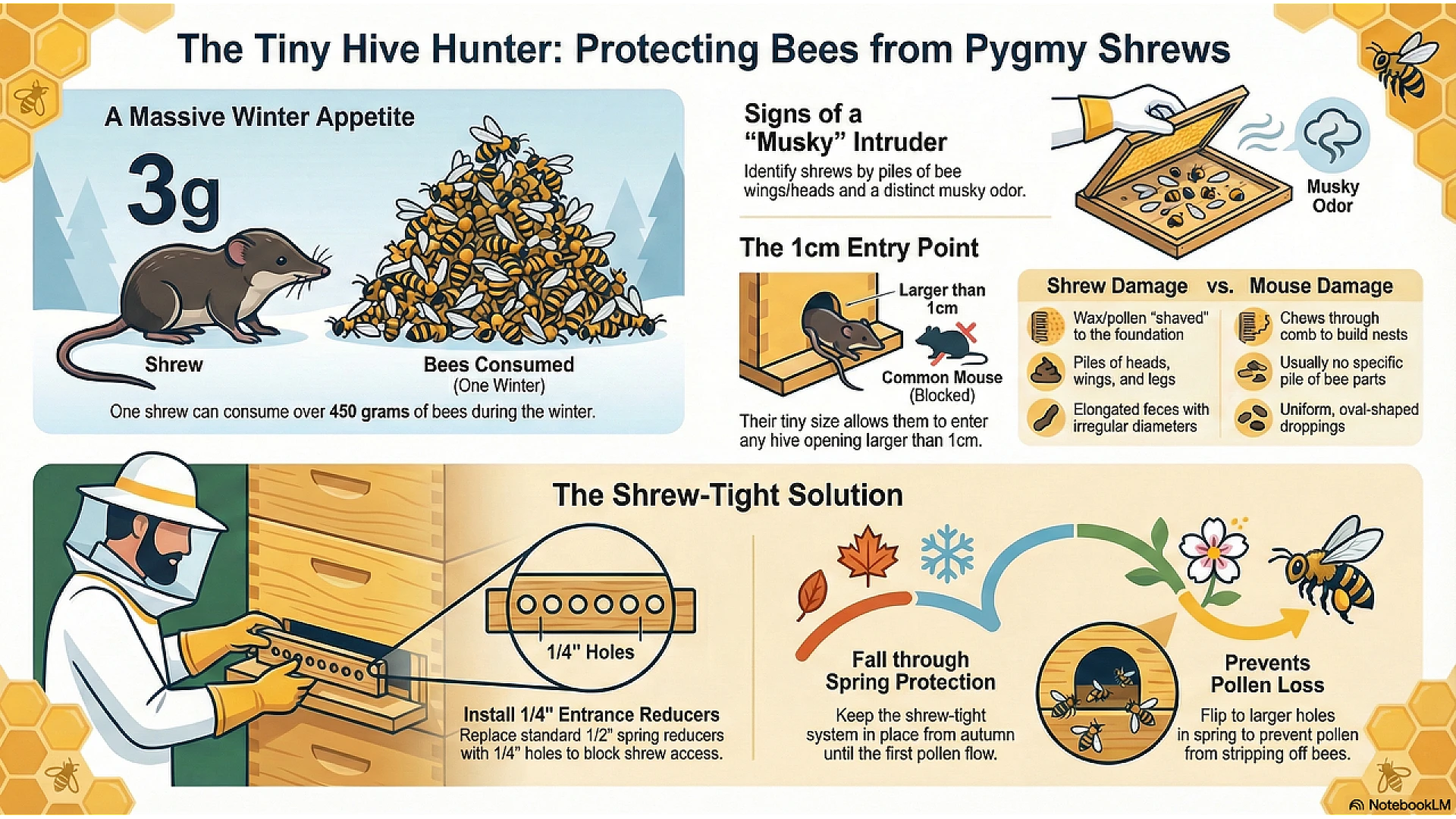

In this article, Fletcher Colpitts highlights the significant but often overlooked threat that pygmy shrews pose to honeybee colonies during the winter months. These tiny, high-metabolism mammals frequently infiltrate hives to feast on sluggish bees, consuming massive quantities of insects to sustain their survival. Beekeepers can identify an infestation by looking for musky odors, specific fecal patterns, and discarded bee fragments like heads and wings. Unlike mice, shrews focus on hollowing out the bee's thorax rather than nesting within the wax combs. To combat this issue, the author recommends implementing a shrew-tight entrance system with specific hole sizes to block entry. By adopting these preventative measures in the fall, apiarists can successfully shield their hives from predation and avoid colony loss.