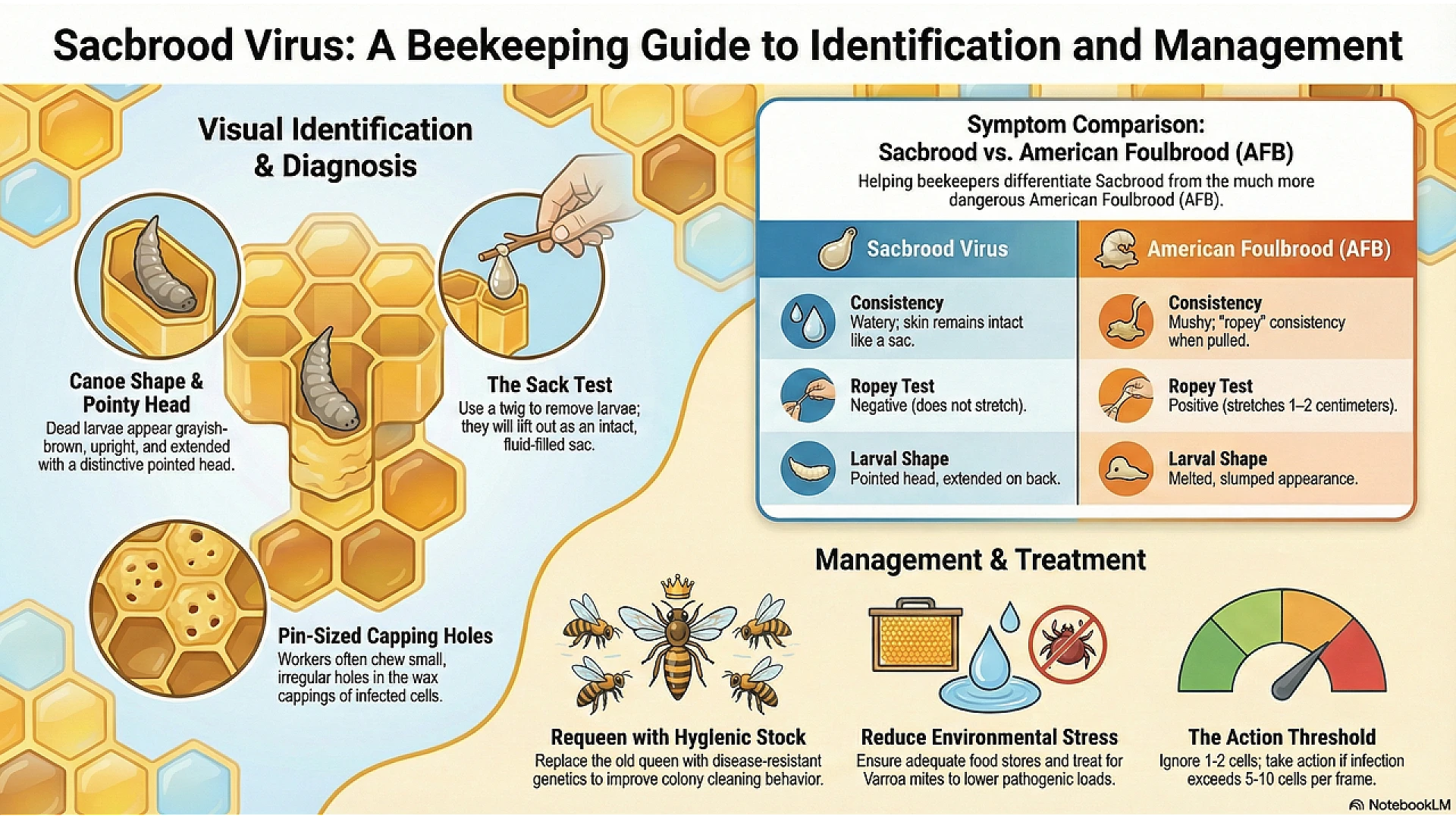

Sacbrood virus is a common honeybee disease that causes larvae to fail to pupate, resulting in fluid-filled, sac-like remains with a distinctive pointed head. Beekeepers can identify the infection by looking for discolored larvae standing upright in cells or perforated cappings that reveal the failing brood. Unlike the more severe American Foulbrood, this viral infection does not produce a "ropey" consistency when tested and often disappears as environmental stress decreases. These sources recommend managing the disease by improving nutrition, maintaining strong colony populations, and requeening with hygienic, disease-resistant stock. In extreme cases, beekeepers should remove and destroy highly infected frames or perform a shook swarm to provide a clean environment for the hive to recover.