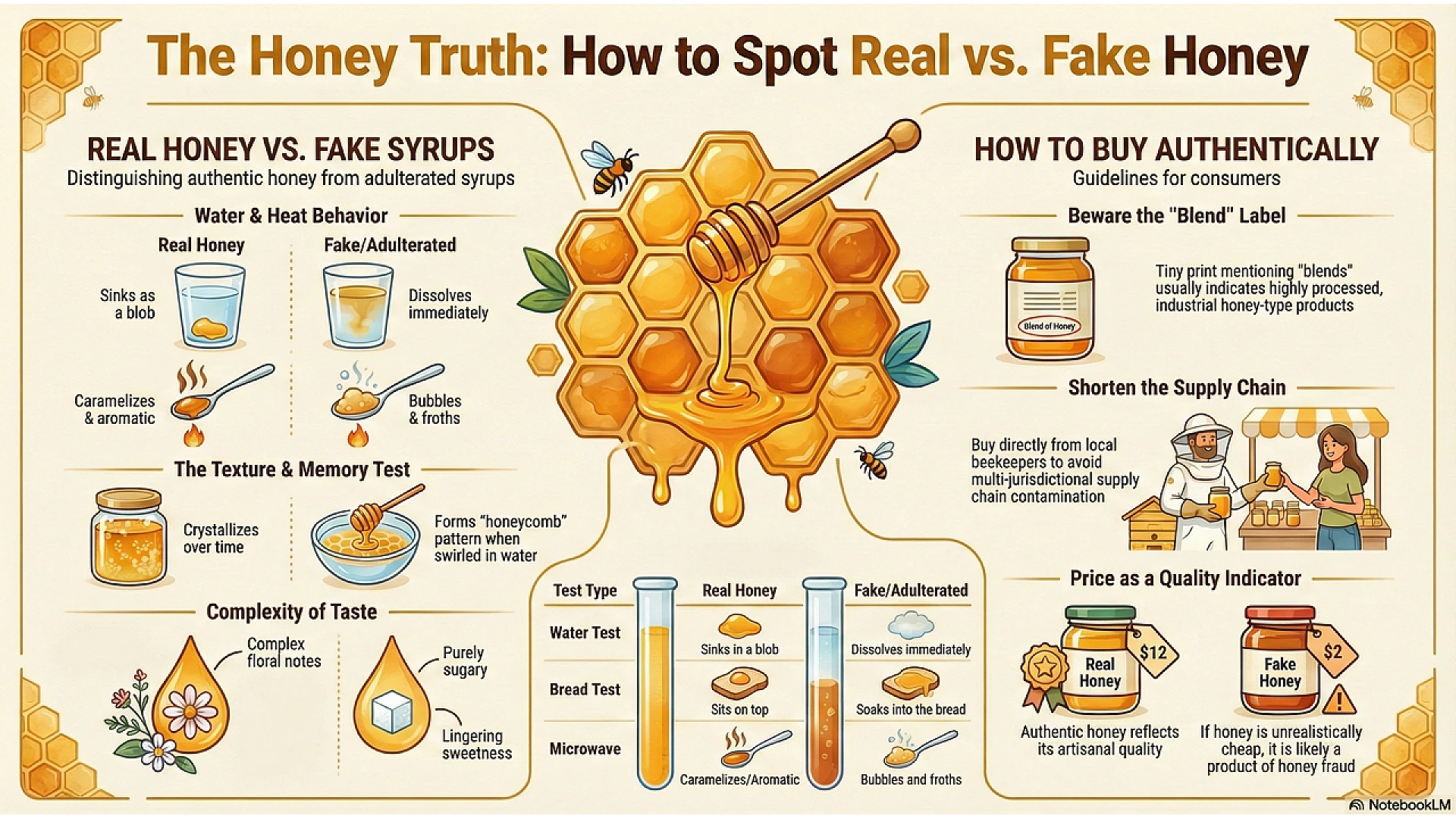

Widespread food fraud has saturated the global market with fake honey, which is often diluted with cheap syrups or harvested before it is fully ripe. While some experts suggest identifying authentic honey through home tests involving water, heat, or texture, others argue these methods are unreliable against sophisticated industrial adulteration. Authentic honey is a complex luxury product that naturally crystallizes and possesses a distinct floral profile, whereas mass-produced versions are often ultra-filtered and lack nutritional value. This fraudulent industry severely devalues the work of local beekeepers, potentially threatening the agricultural stability of crops that rely on bee pollination. To ensure purity, consumers are encouraged to shorten the supply chain by purchasing directly from local producers rather than relying on supermarket blends. Ultimately, recognizing honey as a valuable artisan good rather than a cheap commodity is essential for protecting both the environment and consumer health.