
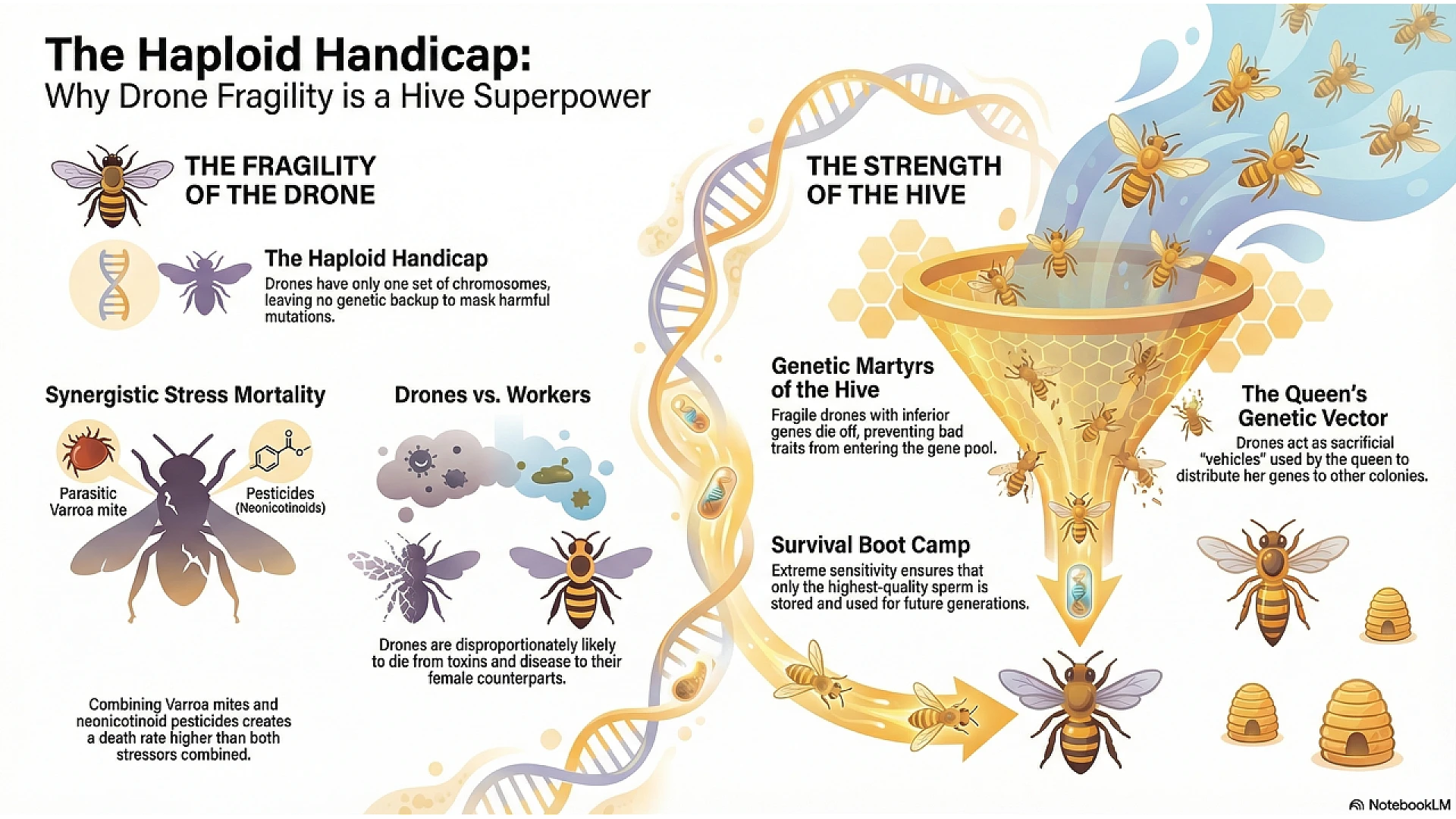
Research identifies that male honey bee drones are uniquely vulnerable to environmental hazards such as pesticides, parasites, and temperature fluctuations. This extreme sensitivity is attributed to their haploid genetic structure, which lacks a secondary set of chromosomes to mask harmful mutations. While this fragility causes high mortality, it functions as a genetic cleansing mechanism that ensures only the most robust individuals pass their traits to future generations. From an evolutionary perspective, this system benefits the queen’s genetic legacy by using drones as disposable vectors for her genes. Ultimately, the drone’s susceptibility acts as a natural filter, strengthening the overall fitness and resilience of the colony.
0Comments
For Comment you need to Login