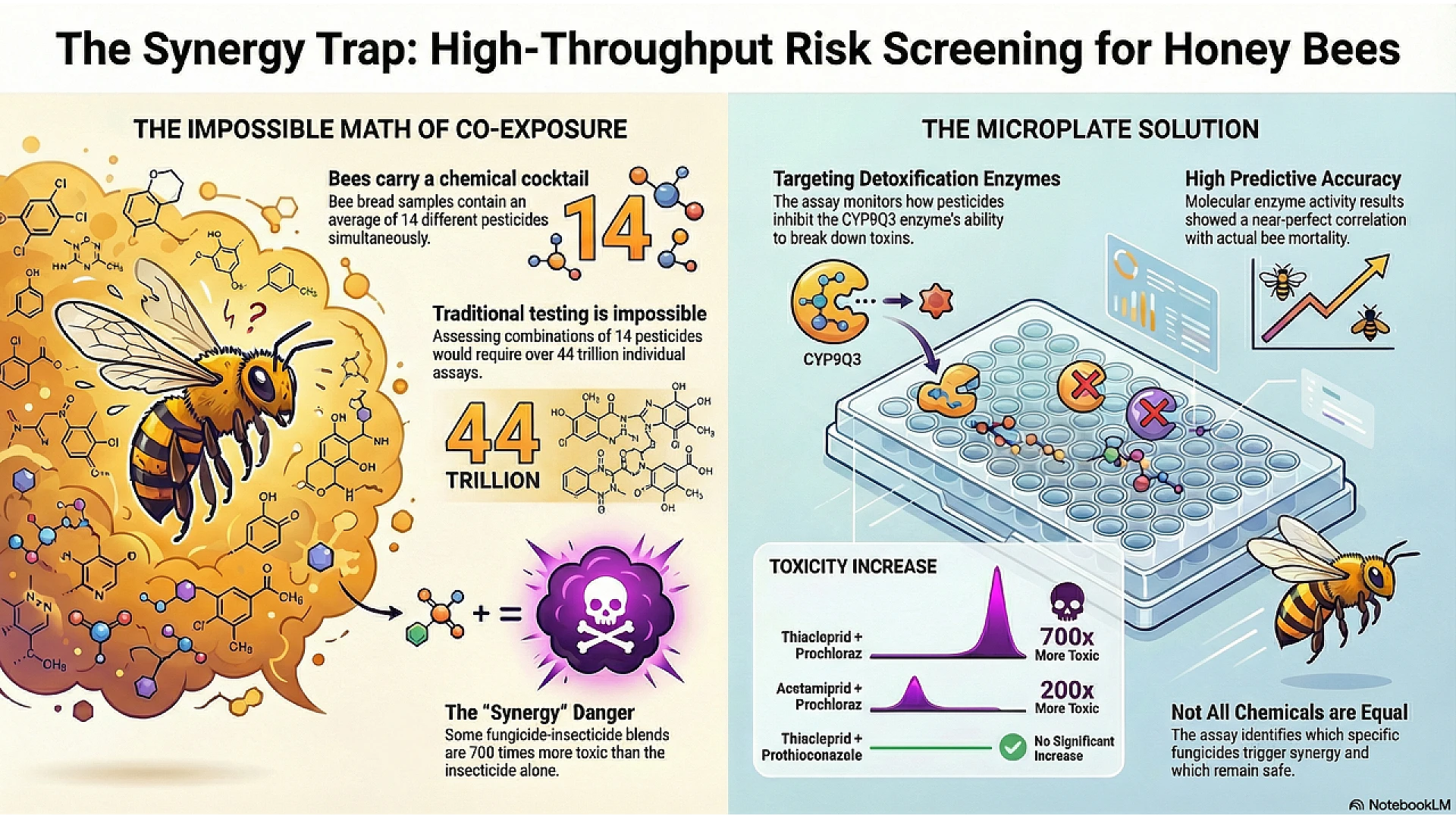

Research reveals that honey bees are frequently exposed to complex pesticide cocktails, yet current regulatory assessments often fail to account for the heightened toxicity caused by chemical interactions. To address this, scientists developed a high-throughput microplate assay that examines how specific pesticides interfere with detoxification enzymes at the molecular level. This innovative method successfully identified that certain fungicides significantly inhibit a bee's ability to process insecticides, resulting in mixtures up to 700 times more lethal than individual doses. By simulating these interactions in a lab setting, the researchers provide a rapid screening tool that could revolutionize how government agencies evaluate environmental risks. This approach offers a practical solution to the impossible task of testing millions of chemical combinations on live insects manually. Ultimately, the study highlights the urgent need for modernized risk assessments to protect pollinator health from ubiquitous chemical synergy.